
Why melasma gets Potenza alongside laser toning, not toning alone
Laser toning mainly works on melasma that sits in small patches. When toning alone is not enough, the answer is not to raise the energy and fire again; a treatment that helps cells turn over from deeper in the skin, such as Potenza or Genesis toning, is added. Potenza is used with the N tip (non-insulated), where the whole needle is the electrode, to warm the dermis broadly and gently. If the spot is a lentigo rather than melasma, it is reduced with a CO2 laser first and then toned, and solar lentigines take several rounds of Potenza alternating with toning.

- PROFESSORAdjunct Professor, Korea University Anam Hospital (current)
- ANATOMYFacial Anatomy Program, Yale University
- ANTI-AGINGAnti-Aging Program, Brigham and Women's Hospital, Harvard
Full profileClose profile
- Adjunct Professor, Korea University Anam Hospital (current)
- Residency, Korea University Anam Hospital
- Facial Anatomy Program, Yale University
- Anti-Aging Program, Brigham and Women's Hospital, Harvard
- Member, Korean Academy of Aesthetic and Laser Surgery
Contents6
- 01Melasma that fades with toning and melasma that needs more
- 02Why toning energy is not raised for melasma that will not fade
- 03Why the Potenza N tip is used to warm the dermis beneath melasma
- 04When faded melasma comes back and a maintenance study
- 05How lentigines and solar lentigines are treated differently from melasma
- 06Frequently asked questions
When people think of melasma treatment, most think of laser toning first. It fires a low-energy laser over several sessions, which makes it the basic treatment for a sensitive pigment like melasma. Some people, though, have had several toning sessions, see less fading than they hoped, and ask what else there is.
Looking back at people treated for pigment at our clinic, those who also had Potenza were more satisfied. Those who had toning alone were more often disappointed.
Melasma that fades with toning and melasma that needs more
Whether to stay with toning or add another treatment depends on how the melasma has settled in the skin. What is usually called toning tends to work on melasma that sits in small patches.
Melasma that has settled in larger and is not enough for toning alone does not just get more toning. Where needed, a treatment that helps cells turn over from deeper in the skin, such as Genesis toning or Potenza, is recommended alongside it.
| Pigment | Treatment used |
|---|---|
| Melasma in small patches | Toning |
| Melasma where toning alone is not enough | Toning + Genesis toning or Potenza |
| Lentigo | Reduce with CO2 laser, then toning |
| Solar lentigo | Several rounds of Potenza alternating with toning |
Why toning energy is not raised for melasma that will not fade
Many people arrive having heard that "the laser breaks up the pigment". That is not wrong, but if that is all you know about melasma it is easy to think the answer to slow fading is a stronger shot.
Melasma is now understood less as pigment piled up in the skin and more as overactive pigment-making cells (melanocytes). These cells pass melanin to the cells around them through branch-like dendrites, and in skin with melasma those dendrites are often more numerous or longer.
When the energy is too high or the exposure too long, heat that should stay in the pigment spreads into the surrounding tissue. That heat damage stimulates the melanocytes again and increases inflammation, and the pigment can end up darker. So when melasma fades slowly, the energy is not raised for another round.
Why the Potenza N tip is used to warm the dermis beneath melasma
Potenza is better known for acne scars and pores. When the same device is used for melasma, the tip and the settings are different.
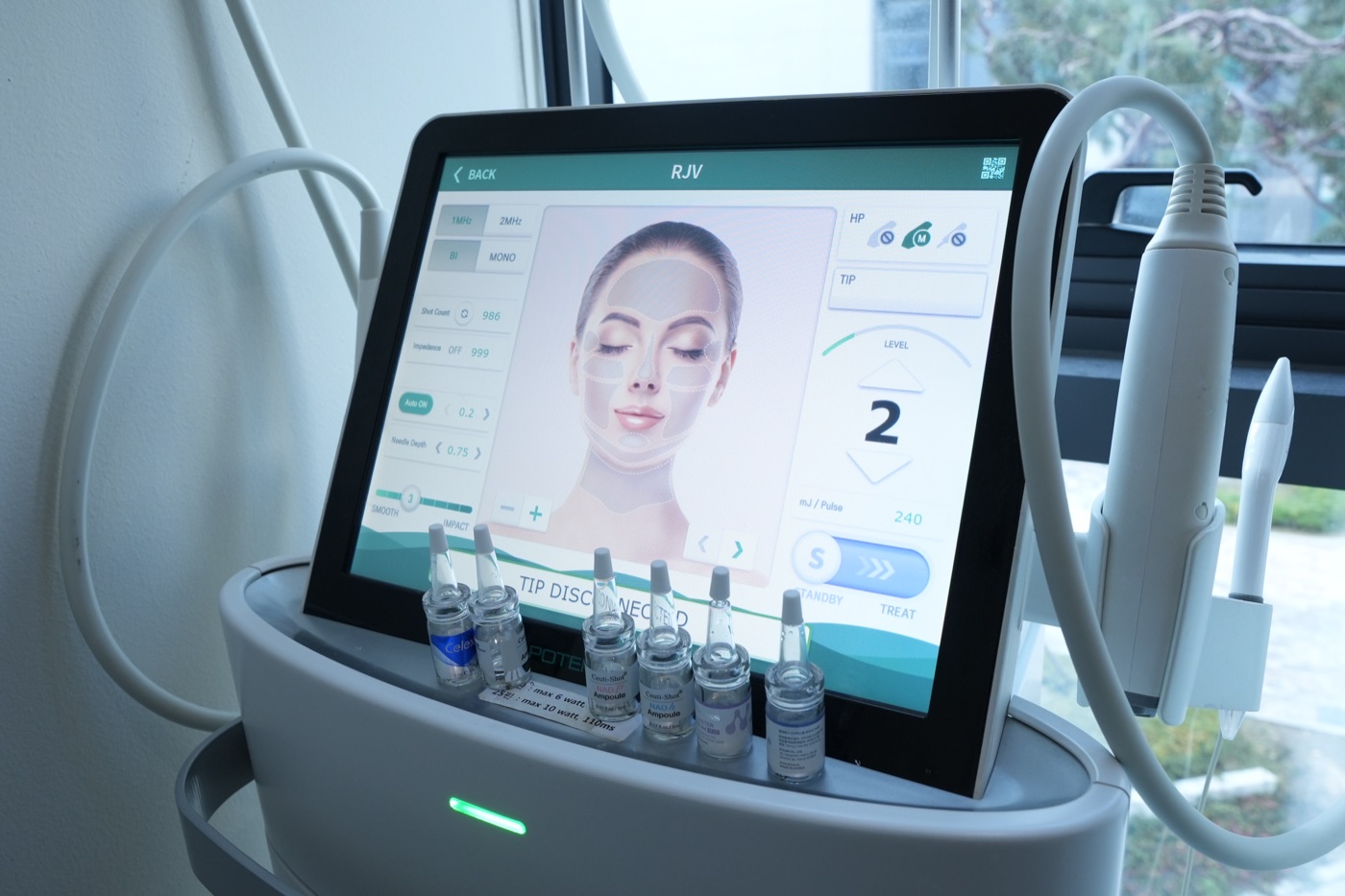
Melasma gets the N tip (non-insulated), where the whole needle is the electrode. The radiofrequency comes out evenly along the length of the needle, so instead of burning one point hard it warms a wide area gently. In the process, blood vessels settle, inflammation goes down and the dermis is rebuilt.
The time the radiofrequency is held (ms) is set differently as well. For acne or scars, where one point needs to change strongly, it is kept short. For melasma, where regeneration and calming inflammation matter more than breaking down tissue, it is set long so that the heat spreads slowly into the surrounding area.
A systematic review published this year gathered 12 studies of radiofrequency microneedling such as Potenza for melasma (Aesthet Surg J Open Forum 2026, PMID 42253423). Melasma scores and melanin indices generally improved, with effects lasting up to 6 months. Post-inflammatory hyperpigmentation was uncommon even in darker skin, and pigment fell further when it was combined with a low-fluence Q-switched Nd:YAG laser (toning) than with either alone.
The studies differed in who and how they treated, so the review could not pool the numbers and summarised them qualitatively. Even so, it points the same way as adding Potenza rather than repeating toning alone.
When faded melasma comes back and a maintenance study
A few months after treatment stops, it is common for melasma that had faded to come back. That is why melasma care is closer to keeping it faint than to removing it. Adding Potenza does not change that.
A team at Ajou University Hospital in Korea gave people with melasma oral tranexamic acid and a triple-combination lightening cream for two months, then stopped the drugs and continued radiofrequency microneedling on one half of the face once a month for six months (Sci Rep 2024, PMID 38200171). During the two months on the drugs, everyone's melasma score fell by 64%. Afterwards the side that kept getting radiofrequency held its improvement, while skin brightness on the untreated side gradually returned to where it started.
Fifteen people took part and eleven finished, so it is a small study. Read it as a sign that treating the dermis may help slow melasma coming back, and no more.
How lentigines and solar lentigines are treated differently from melasma
When you show a brown patch on your face, the first thing checked is whether it is melasma or a lentigo. A lentigo does not spread like a haze the way melasma does; it is a brown spot with a fairly clear edge.
Where a lentigo has darkened, it is reduced with a CO2 laser first and then toned. A solar lentigo, caused by sunlight, does not clear in one or two sessions, so it usually takes several rounds of Potenza alternating with toning.
Because it needs many visits, it is hard to readily suggest starting it to someone who lives far from the clinic and cannot come often. If you are visiting Korea for a short stay, a solar lentigo is not something to plan around a single trip.
Frequently asked questions
QDoes Potenza work for melasma?
Warming the dermis broadly and gently with the Potenza N tip settles blood vessels and reduces inflammation, which helps melasma treatment. At our clinic, people who added Potenza to their pigment treatment were more satisfied than those who had toning alone.
QCan melasma be treated with toning alone?
For melasma in small patches, toning usually works. When toning alone is not enough, Potenza or Genesis toning is added.
QIs the Potenza tip for melasma the same as for acne scars?
No. Melasma gets the N tip, where the whole needle is the electrode, with the radiofrequency held for longer. Acne and scars get the I tip, which gathers heat at the needle end, with a shorter time.
QIf my melasma is fading slowly, should I get stronger toning?
Too much energy lets heat spread into the surrounding tissue, which stimulates the pigment-making cells again and can make the pigment darker. Rather than raising the strength, a different kind of treatment is added.
QIs a lentigo treated like melasma?
Where a lentigo has darkened, it is reduced with a CO2 laser first and then toned. A solar lentigo takes several rounds of Potenza alternating with toning.
QOnce Potenza fades my melasma, will it stay away?
Melasma care is closer to keeping it faint than to removing it. It can darken again with sun exposure or hormonal changes.
1 min walk from Dunchon-oryun Stn. Exit 1 (Line 9)
Tel 02-488-9119