
Why HILO WAVE is now the main choice for lateral cheek filler
For people who come in with a hollow lateral cheek, HILO WAVE is now the main choice. It fills naturally and, in the lateral cheek, tends to hold well. Neuramis Classic and Belotero Volume were used before. HILO WAVE may not hold its shape as strongly as a high-elasticity filler, so faces that need support built up in the deep layer get a high-elasticity filler as well. For people whose skin loosened after losing weight quickly, Potenza is usually recommended.

- PROFESSORAdjunct Professor, Korea University Anam Hospital (current)
- ANATOMYFacial Anatomy Program, Yale University
- ANTI-AGINGAnti-Aging Program, Brigham and Women's Hospital, Harvard
Full profileClose profile
- Adjunct Professor, Korea University Anam Hospital (current)
- Residency, Korea University Anam Hospital
- Facial Anatomy Program, Yale University
- Anti-Aging Program, Brigham and Women's Hospital, Harvard
- Member, Korean Academy of Aesthetic and Laser Surgery
Contents7
- 01How lateral cheek filler moved to HILO WAVE
- 02How HILO WAVE differs from a regular hyaluronic acid filler
- 03When HILO WAVE alone is not enough and a high-elasticity filler is added
- 04Why collagen-stimulating fillers are not used alone in the lateral cheek
- 05When Potenza is recommended for a lateral cheek loosened by weight loss
- 06A study injecting low- and high-molecular-weight hyaluronic acid into the lateral cheek fat
- 07Frequently asked questions
In lateral cheek filler consultations, many people ask which product is used. Some come in with the name of the product a friend had written down.
The lateral cheek supports the outer cheekbone and the outer midface, so even among hyaluronic acid fillers, cohesivity and elasticity have to fit. Cohesivity is how well the gel stays as one mass where it was placed; elasticity is how well it resists pressure and keeps its shape. With too little elasticity, the volume spreads downward over time; with low cohesivity, the shape does not stay where it was placed.
How lateral cheek filler moved to HILO WAVE
In the early days of lateral cheek filler, two products were used. Neuramis Classic for people who wanted to keep the cost down, and Belotero Volume for those who wanted the line above it.
These days the lateral cheek is almost always done with HILO WAVE. In use, it fills naturally and, in the lateral cheek specifically, tends to hold well. That observation is from the lateral cheek, so it is not claimed for other areas.
Other products are not dropped entirely. Neuramis Heart is used now and then because its cohesivity is a little better than Neuramis Classic. Belotero is used only in its Volume line.
How HILO WAVE differs from a regular hyaluronic acid filler
Many people say they have never heard the name HILO WAVE. The manufacturer describes it as combining low- and high-molecular-weight hyaluronic acid with minimal cross-linking. It is approved as a Class 4 medical device by Korea's Ministry of Food and Drug Safety and is marketed in Korea as a skin booster.
With regular hyaluronic acid fillers, volume that sets too firmly and looks unnatural has long been a complaint. HILO WAVE is made to reduce that. It blends well with the tissue and moves naturally, so there is less foreign-body feel after treatment and a softer result can be expected. These properties help when shaping a natural contour in the superficial and middle layers.
It is hard to split hyaluronic acid products cleanly into fillers and skin boosters. They run along one line, from skin boosters with almost no cross-linking that spread widely, through lightly cross-linked products, to regular fillers that hold their shape firmly. Where a product sits on that line changes how far it spreads, how long it lasts and how much volume it builds. Lightly cross-linked products, once injected, often give a little volume and last longer than expected, so they can feel like a soft filler.
When HILO WAVE alone is not enough and a high-elasticity filler is added
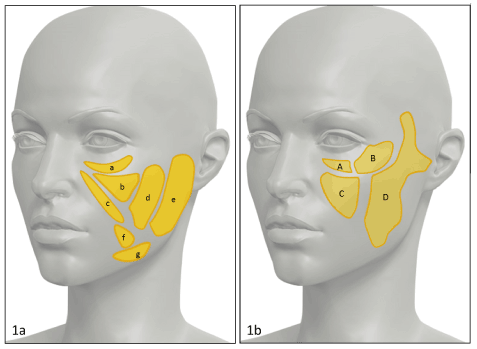
Seen from the side, some faces run in a straight line from below the cheekbone to the jawline. The outer support has weakened and the face has flattened, so softly filling the surface alone does not give it shape.
HILO WAVE may have less holding power than a high-elasticity filler. When a face needs volume built up structurally, HILO WAVE is not asked to do everything; the layers are divided. A high-elasticity filler builds support in the deep layer, a filler with moderate cohesivity links the volume in the middle layer, and a soft product refines the contour near the surface. Trying to cover every layer with one filler tends to leave something lacking.
| Layer | Role | What goes in |
|---|---|---|
| Deep layer above the bone | Builds support | High-elasticity filler |
| Middle layer | Links the volume | Filler with moderate cohesivity · HILO WAVE |
| Superficial layer under the skin | Refines the contour | Soft, blending product · HILO WAVE |
Why collagen-stimulating fillers are not used alone in the lateral cheek
People also ask whether the lateral cheek can be filled with a collagen-stimulating filler such as Juvelook (PDLLA) or Olidia (PLLA). These work by prompting the body to make its own collagen, which is a different approach from a regular filler.
Used alone in the lateral cheek, though, they have clear limits. They build little volume right away, so reaching the desired fullness often takes several sessions. Response varies widely between people, and even in the same person the result can change with their condition on the day, so the outcome is hard to predict. The chance of nodules is also relatively higher.
The lateral cheek has to act as support and has to come out in the intended shape. So collagen-stimulating fillers are not used alone there, and whether to combine them is considered carefully.
When Potenza is recommended for a lateral cheek loosened by weight loss
Many people come in saying their cheeks sank after losing weight on a diet. Here the lost volume and the loosened skin are looked at separately. Volume is usually lost most in the lateral cheek, so it is filled with HILO WAVE. When the skin loosened because weight came off quickly, Potenza is usually recommended.
If the lateral cheek fills back in naturally when the face is tilted up slightly, sagging is a bigger factor than hollowing. In such a face, what is filled in can settle in the direction of gravity and make the lower face look heavier, so filler alone has limits.
Some faces already have well-developed cheekbones with no room to widen further. Adding volume beside the cheekbone and at the side of such a face tends to make it look wider and heavier rather than lifted. In that case the advice is that it is better not to fill today.
A study injecting low- and high-molecular-weight hyaluronic acid into the lateral cheek fat
One study injected a product combining low- and high-molecular-weight hyaluronic acid into the lateral cheek fat compartment. An Italian team gave 50 healthy adults two injections one month apart and assessed them with a facial volume loss scale and a wrinkle scale until three months after the last treatment (Health Sci Rep 2024 · PMID 38260185).
Both scores improved significantly from the first treatment and stayed improved three months after treatment ended. No serious adverse events were reported.
This study looked at a different product, Profhilo Structura, not HILO WAVE. It is an uncontrolled observational study of 50 people, and some authors are employees of the manufacturer. The result is not carried over to HILO WAVE. Read it only as showing that a low- and high-molecular-weight hyaluronic acid has been used in the lateral cheek fat and followed for three months.
Frequently asked questions
QWhich product is used for lateral cheek filler?
These days almost always HILO WAVE. It fills naturally and tends to hold well in the lateral cheek. When more cohesivity is needed, Neuramis Heart is used, and Belotero is used only in its Volume line.
QIs HILO WAVE a filler or a skin booster?
The manufacturer presents it as a skin booster with low- and high-molecular-weight hyaluronic acid and minimal cross-linking. In the lateral cheek it fills naturally and helps when shaping the contour in the superficial and middle layers.
QCan HILO WAVE alone fill the lateral cheek?
Its holding power may be weaker than a high-elasticity filler. Faces where the line below the cheekbone runs straight down and support needs building get a high-elasticity filler in the deep layer as well.
QCan the lateral cheek be filled with Juvelook or Olidia alone?
Collagen-stimulating fillers build little volume right away, vary widely between people and carry a relatively higher chance of nodules, so they are not used alone in the lateral cheek.
QAre cheeks that sank after weight loss also filled with HILO WAVE?
Lost volume is filled with HILO WAVE. When the skin loosened because weight came off quickly, Potenza is usually recommended. If the lateral cheek fills back in when the face is tilted up, sagging is the bigger factor and filler alone has limits.
1 min walk from Dunchon-oryun Stn. Exit 1 (Line 9)
Tel 02-488-9119