
Why skin botox resistance comes from dose and interval rather than depth
The resistance people worry about with repeated skin botox is linked to how much and how often it is given rather than how deep it goes. In an analysis of 33 clinical trials, 27 of 5,876 people (0.5%) developed neutralizing antibodies, and 5 of them lost effect. A 2024 review named cumulative dose and number of treatment cycles as the risk factors. There is also an idea that different depths suit redness, fine lines and pores, but it is still a hypothesis, not an established distinction.

- PROFESSORAdjunct Professor, Korea University Anam Hospital (current)
- ANATOMYFacial Anatomy Program, Yale University
- ANTI-AGINGAnti-Aging Program, Brigham and Women's Hospital, Harvard
Full profileClose profile
- Adjunct Professor, Korea University Anam Hospital (current)
- Residency, Korea University Anam Hospital
- Facial Anatomy Program, Yale University
- Anti-Aging Program, Brigham and Women's Hospital, Harvard
- Member, Korean Academy of Aesthetic and Laser Surgery
Contents7
- 01How deep skin botox is placed in Korea and in Taiwan
- 02The hypothesis that depth matches each skin concern
- 03How often Botox neutralizing antibodies actually form
- 04Shallow skin botox and resistance
- 05How skin botox dose and interval are set
- 06Skin botox results checked item by item at the next visit
- 07Frequently asked questions
"I heard you build resistance if you get Botox often." This worry comes up often at skin botox consultations. Some go on to ask, "Doesn't putting it shallow in the skin make resistance more likely?"
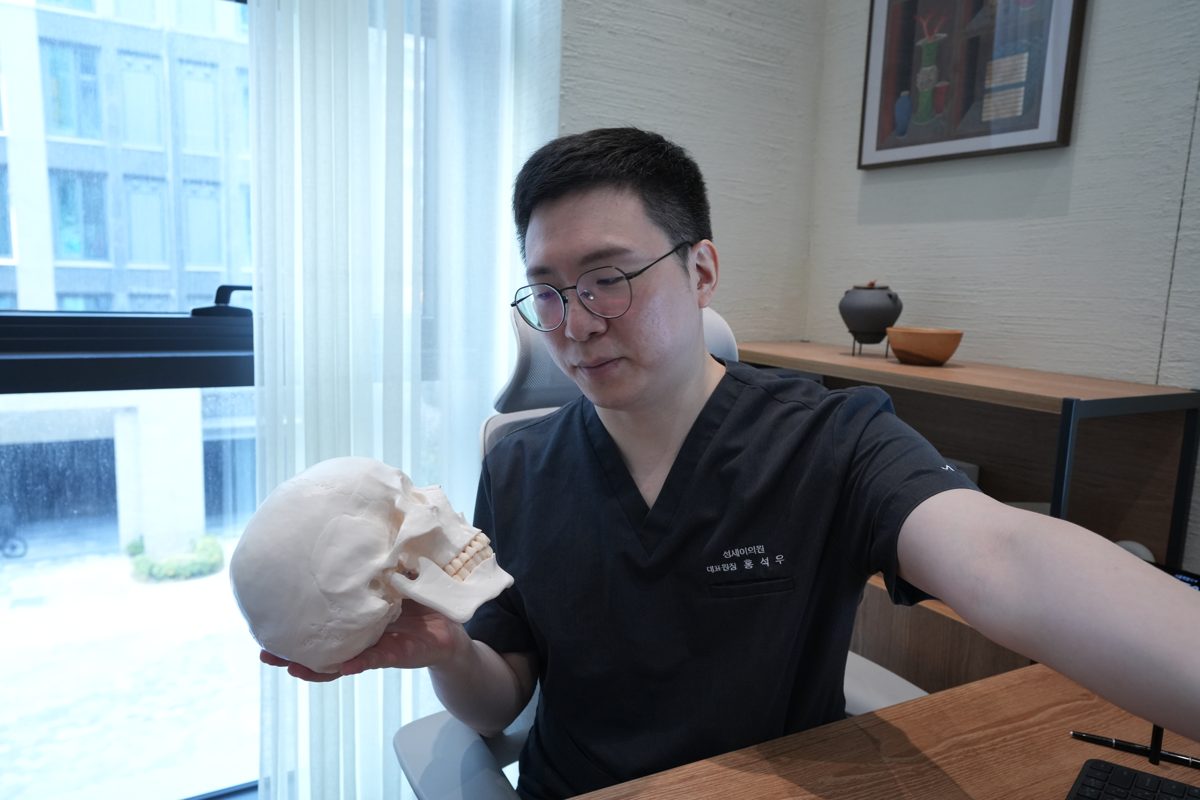
To answer that, it helps to see which layer of skin the drug goes into. Dr. Hong completed the Facial Anatomy Program at Yale University, and in the consultation room he still holds a skull model and points out the layers that sit on the bone one by one.
How deep skin botox is placed in Korea and in Taiwan
Many people picture skin botox as tiny bumps rising all over the face. In Korea, placing it in a shallow layer so that these bumps form is the common approach.
In Taiwan, placing it a little deeper so that no bumps form is reportedly more common. With the same drug going into different layers in different countries, two questions follow. Does the effect change with depth? And if you also think about resistance from repeated treatment, how should it be placed?
The hypothesis that depth matches each skin concern
Botulinum toxin stops nerve endings from releasing a signaling substance called acetylcholine. Besides the nerves that move muscles, the skin has sensory and autonomic nerves, and these are involved in the work of oil glands, blood vessels and other skin structures. So toxin placed in the skin layer can affect oil production, redness and texture.
One hypothesis follows from this: deep dermis might favor redness, the middle dermis fine lines, and the shallow dermis pores and oil. Redness comes from blood vessels and nerve reactions together, shine and pores are tied to nerve signals to the oil glands, and fine lines relate to tiny muscle-like structures in the skin. The idea is that the drug may need to reach a slightly different place for each concern.
It is still a hypothesis, not an established distinction. An analysis pooling studies of botox in the skin layer had few studies, with methods and outcome measures that varied between them, and its authors concluded more research is needed.
So the number of millimeters is not decided first. The first question is whether the concern is redness, fine lines, or pores and oil, and the drug is placed so it stays there. If the concern is deep expression lines that fold when you smile, that is handled with Botox placed into muscle, not skin botox.
How often Botox neutralizing antibodies actually form
For people worried about resistance, the first thing to cover is how often it actually happens. With repeated botulinum toxin, the body very rarely makes neutralizing antibodies against the drug, and the drug can then work less well. This is what is usually called resistance.
A 2023 meta-analysis pooled 33 clinical trials of one Botox product (onabotulinumtoxinA) across 10 therapeutic and aesthetic uses, with nearly 30,000 records. Of 5,876 people who could be tested, 27 (0.5%) developed neutralizing antibodies after treatment, and 16 (0.3%) still had them at the end of the studies. Only 5 were judged to have actually lost effect (Toxins 2023 · PMID 37235376).
That is roughly one person in 200 developing antibodies, and fewer than one in 1,000 losing effect. It pooled only the registration trials of one product, and the figures are not for skin botox alone. Most of the authors are employees of the manufacturer, which is worth keeping in mind.
Shallow skin botox and resistance
When asked, "Doesn't putting it shallow make resistance more likely?", the answer is that there is no evidence that injection depth itself causes more resistance.
The meta-analysis above found no clear link between antibodies and sex, dose, interval or injection site. That also means so few people developed antibodies that these links were hard to test.
A 2024 literature review across products and uses named cumulative dose and number of treatment cycles as the factors that set the risk of antibodies. It concluded that repeated injections raise the risk, and noted that how antibodies form needs more research (Life 2024 · PMID 39459517).
So what drives resistance is not depth but how much and how often. Whatever layer it goes into, the same rules apply.
How skin botox dose and interval are set
Some ask, "Should I get it again before it wears off?" Even so, the schedule is set so that treatments are not too frequent. The dose is also only what the concern needs, because more drug does not mean a better result.
If it seems weaker a few days after treatment, more is not added right away. Skin botox settles in over one to two weeks, and adding more in that window can just raise the total amount in the body, so the advice is to wait a little.
That is also why the dates and areas of past Botox or skin botox are asked about at the visit. Botox in other areas has to be seen together to set this dose and interval. If you have had treatments in different countries, a note of each date and area is enough.
| Common worry | What is actually checked |
|---|---|
| Frequent Botox causes resistance | It is rare, and cumulative dose and repeat count raise the risk |
| Shallow placement causes more resistance | No evidence that depth itself causes more |
| If it seems weak, add more right away | Wait the one to two weeks it takes to settle, then decide |
Skin botox results checked item by item at the next visit
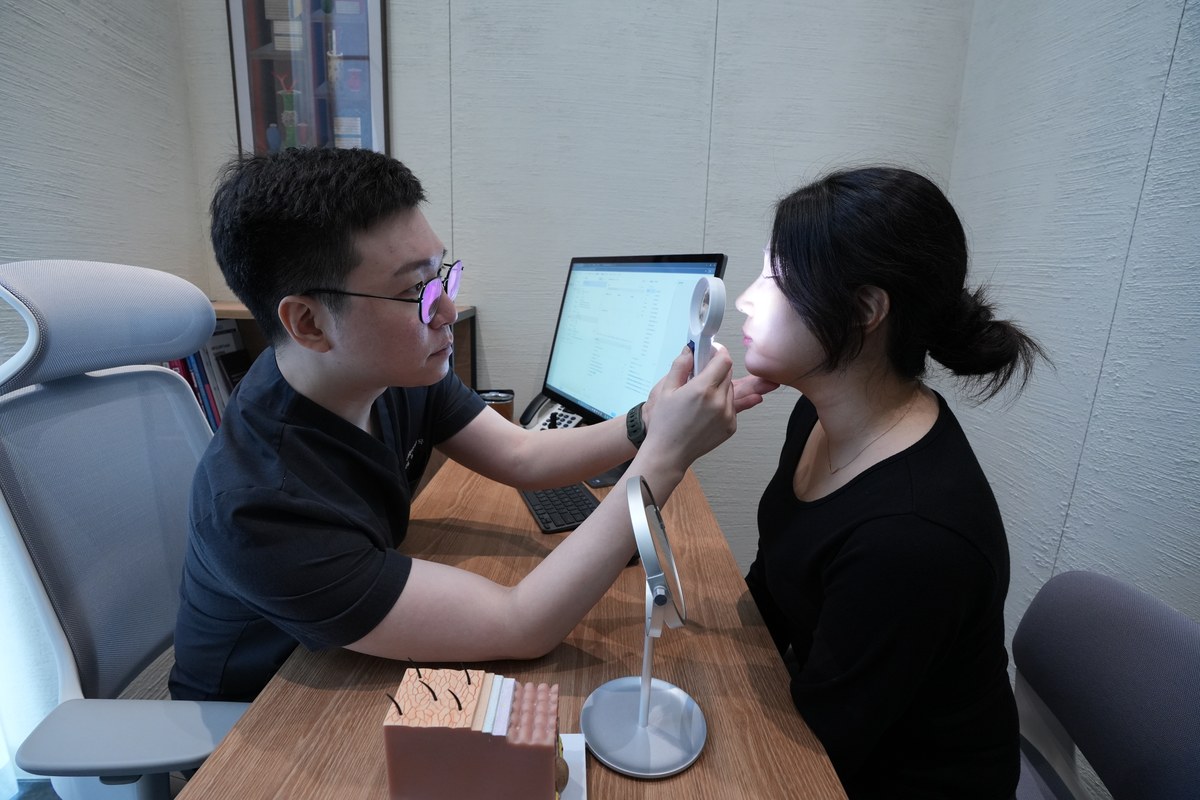
At the next visit, pores, oil, redness and texture are looked at again one by one. Because the main concern was chosen together under a magnifier at the first consultation, that item is checked first for how much it has changed.
Raising the effect and preventing resistance are thought about separately. The effect is sought from several directions, reducing oil, rebuilding the dermis and refining texture, while resistance is prevented by keeping to dose and interval however it is given.
At the visit, please share the dates and areas of past Botox or skin botox. It also helps to say which bothers you most: pores, oil or redness.
Frequently asked questions
QDoes frequent skin botox cause resistance?
It is rare. In an analysis of 33 clinical trials, 27 of 5,876 people (0.5%) developed neutralizing antibodies and 5 lost effect. The risk relates to cumulative dose and number of treatments, so dose and interval are kept.
QDoes shallow placement make resistance more likely?
There is no evidence that depth itself causes more resistance. The meta-analysis also found no clear link between injection site and antibodies, though so few people developed them that it was hard to test.
QDoes the effect change with injection depth?
There is a hypothesis that deep dermis favors redness, middle dermis fine lines and shallow dermis pores and oil, but it is not an established distinction. So the concern is identified first and the drug is placed to stay there.
QIf it seems weak, can I get more right away?
Skin botox settles in over one to two weeks. More is not added right away; it is reassessed after that time.
QWhat should I tell the clinic at the visit?
The dates and areas of past Botox or skin botox, and whether pores, oil or redness bothers you most.
1 min walk from Dunchon-oryun Stn. Exit 1 (Line 9)
Tel 02-488-9119