
No face wash while travelling: is hotel body wash all right?
It comes up more often than you would expect. Washing with hotel body wash once or twice is unlikely to make acne suddenly worse. What can happen is temporary tightness, stinging or redness. The question is less about acne than about the barrier.

What an acne cleanser actually does
People picture an acne cleanser as something that strips oil hard. That is not necessarily the purpose. A salicylic acid cleanser, for instance, works less by removing sebum than by helping clear accumulated keratin at the pore opening. Depending on the product, managing pores and keratin matters more than cleansing strength.
Hotel body wash is made for the body, not the face. That does not make every body wash harsher than every facial cleanser: surfactant type and concentration, pH, fragrance and humectants all differ. But when body wash is used on the face, tightness afterwards is common, because lipids that make up the barrier can be washed away along with sebum. Strongly fragranced or high-cleansing products can leave the face dry, stinging or red.
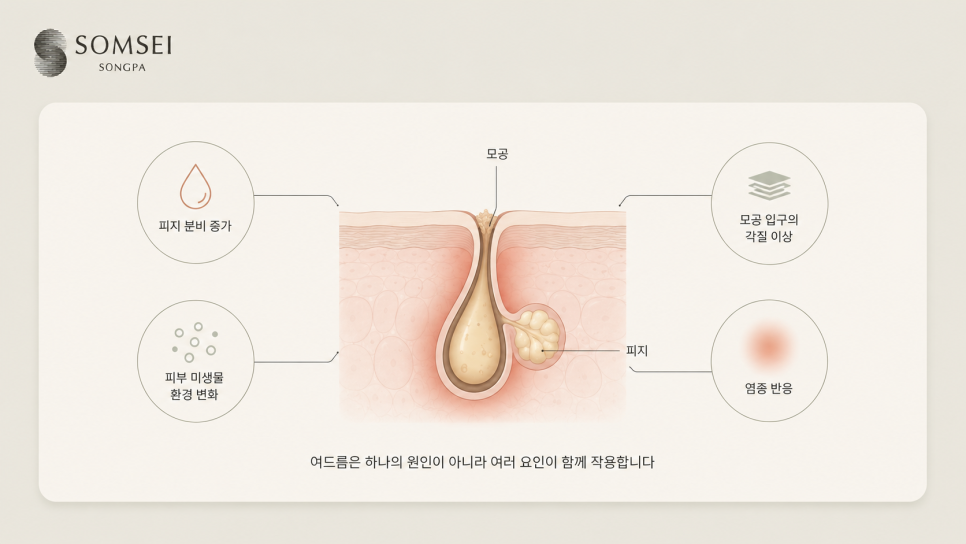
For acne-prone skin, what is needed is not the strongest possible wash but washing gently enough and keeping the barrier intact. Acne is not simply a matter of a dirty face or excess sebum. Sebum production, abnormal keratin at the pore opening, the skin microbiome including C. acnes, and inflammation all take part: it is a chronic inflammatory condition of the pilosebaceous unit. Cosmetics, lifestyle, hormonal change and stress influence that process or worsen existing acne.
Washing hard with a strongly degreasing product, or several times a day, affects not only surface sebum but the lipids and proteins that make up the barrier, leaving tightness, dryness and stinging and a weakened barrier.
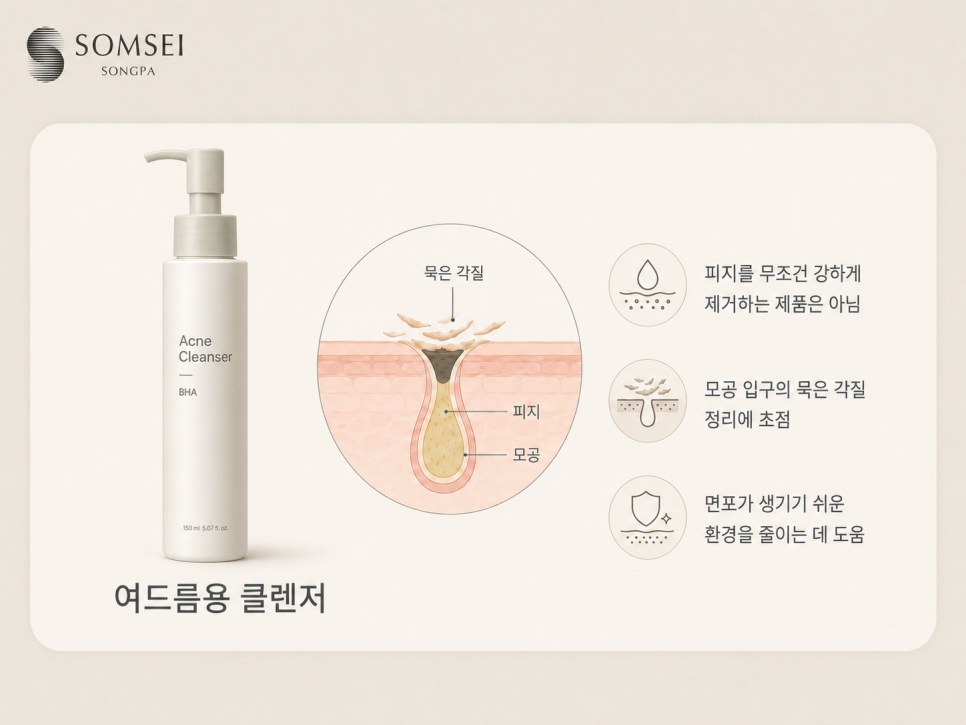
A breakout the next day is usually not from this
Acne forms as sebum and keratin accumulate in the pore and inflammation progresses, usually over days to weeks. One or two washes with body wash is unlikely to produce a face full of acne the next day. If something appeared, it was likely already under way.
What is more common shortly after body wash is irritation rather than acne: marked tightness right after washing, stinging around the mouth or eyes, redness and burning, itching, and increased irritation where acne treatment is applied: particularly with retinoids, benzoyl peroxide, salicylic acid or isotretinoin.
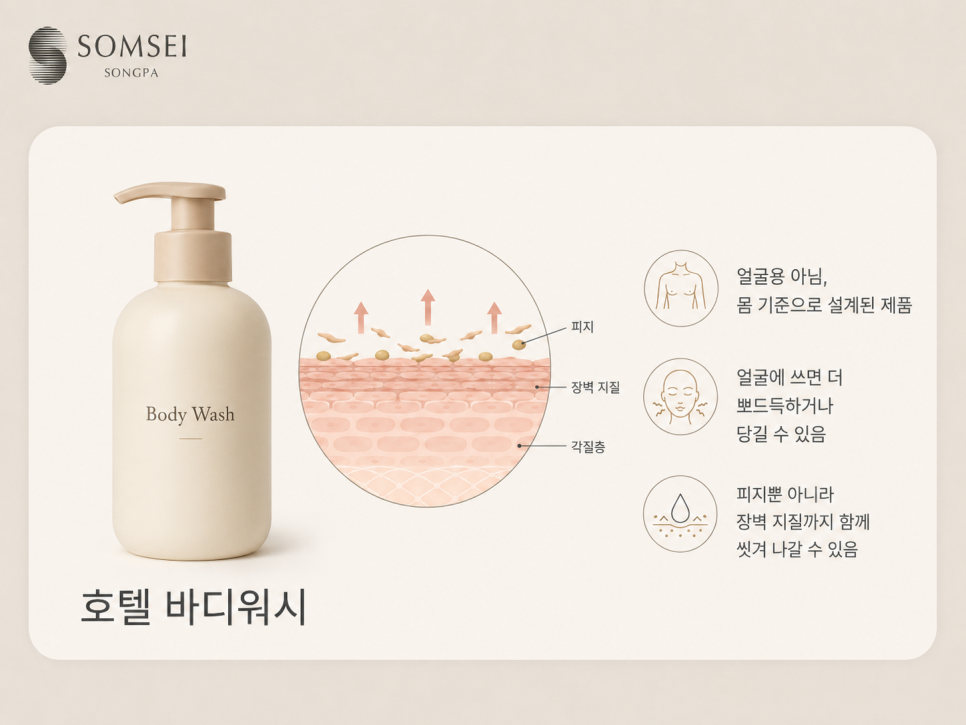
If you have to use it
First check whether the hotel has a facial cleanser. If not, buying a gentle facial cleanser nearby is best. If you have to use body wash:
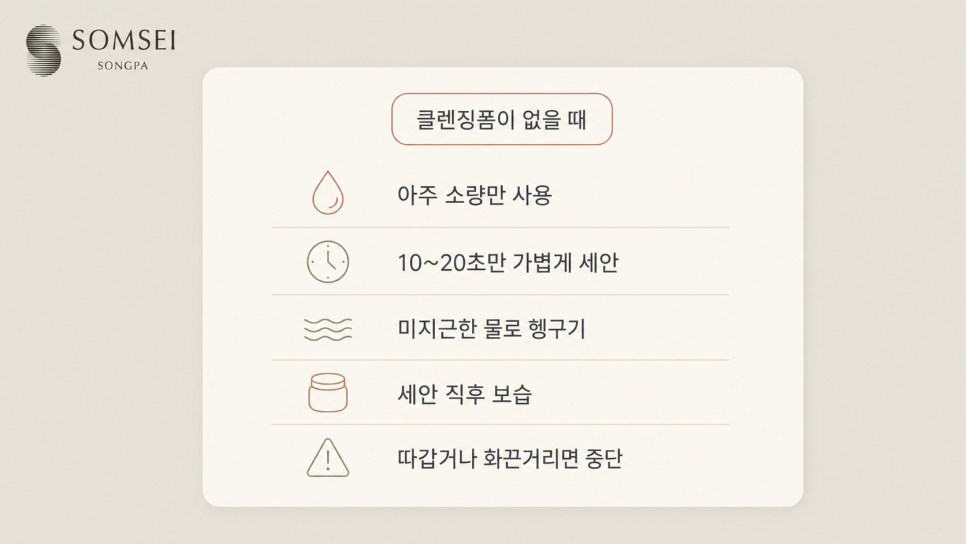
- Use very little, diluted well with water
- Do not rub for long: 10 to 20 seconds with the fingertips is enough. No scrubbing
- Rinse with lukewarm water. Hot water strips more oil
- Moisturise straight after. If it feels tight, apply more than usual
- Stop immediately if it stings or burns
Sometimes water alone is better
If you wore no make-up and no waterproof sunscreen that day, and your skin is very sensitive, washing once with lukewarm water alone can be better than using body wash. If you did wear make-up or waterproof sunscreen, water alone may not remove it sufficiently.
When not to use it on the face
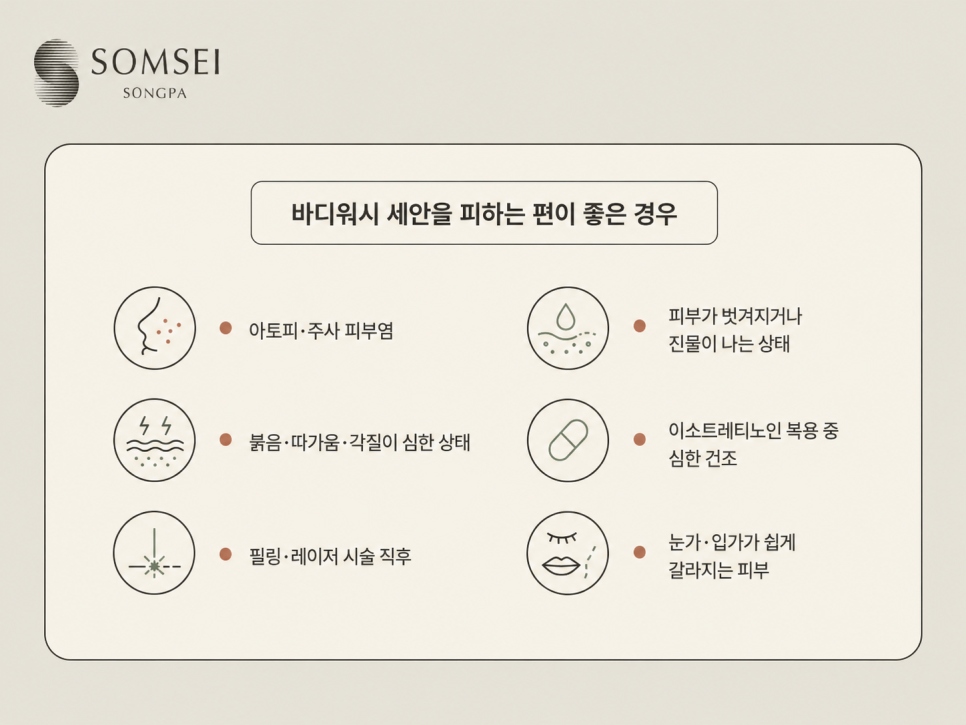
Atopic dermatitis or rosacea; skin already red, stinging or flaking; a barrier weak enough that even cosmetics irritate; straight after a peel or laser; skin that is peeling or weeping; marked dryness from isotretinoin; cracking around the eyes and mouth.
Frequently asked questions
Will it block my pores?
One or two uses is unlikely to block pores suddenly. If it is not rinsed off well, or the fragrance and cleansing agents irritate, redness or stinging can follow.
Can I wash with water only?
If you wore no make-up and only a light sunscreen, once with lukewarm water is fine. With waterproof sunscreen or make-up, buy a facial cleanser.
Can I use shampoo instead?
Not recommended. Shampoo is formulated for scalp and hair, and fragrance or scalp actives can irritate facial skin.
Is bar soap better?
It varies, but ordinary bar soap is alkaline enough to leave tightness and dryness. If you must choose, use a small amount of whichever stings less, and moisturise immediately.
Is a tight feeling a sign of a good wash?
No. Marked tightness can be a sign that oil and barrier components the skin needed have been over-removed.
1 min walk from Dunchon-oryun Stn. Exit 1 (Line 9)
Tel 02-488-9119