
Does an ingrown toenail always need surgery? How clip correction works, and how long it takes
An ingrown toenail does not heal on its own — the longer it is left, the harder treatment becomes as inflammation and secondary infection set in. There is a way to correct the nail with a clip instead of removing it, done in about 10–15 minutes without anaesthesia. It is not the right method for every nail, however, so checking thickness, deformity and inflammation comes first.

I still remember a bride-to-be who limped into my consultation room not long ago. With her wedding coming up she had to wear dress shoes, but even a short walk left her toe swollen and painful.
- "Surgery scares me: does clip correction really work?"
- "How often would I need to come to the clinic?"
- "How many months does it take to heal completely?"
An ingrown toenail is the classic condition people keep putting off: it hurts, seems to improve a little, and gets postponed again. Every step stings, shoes press on the side of the nail, and just when it seems to be healing, the nail digs into the flesh again. Let me start with whether correction without removal actually works.
Straightening the nail with a clip instead of removing it
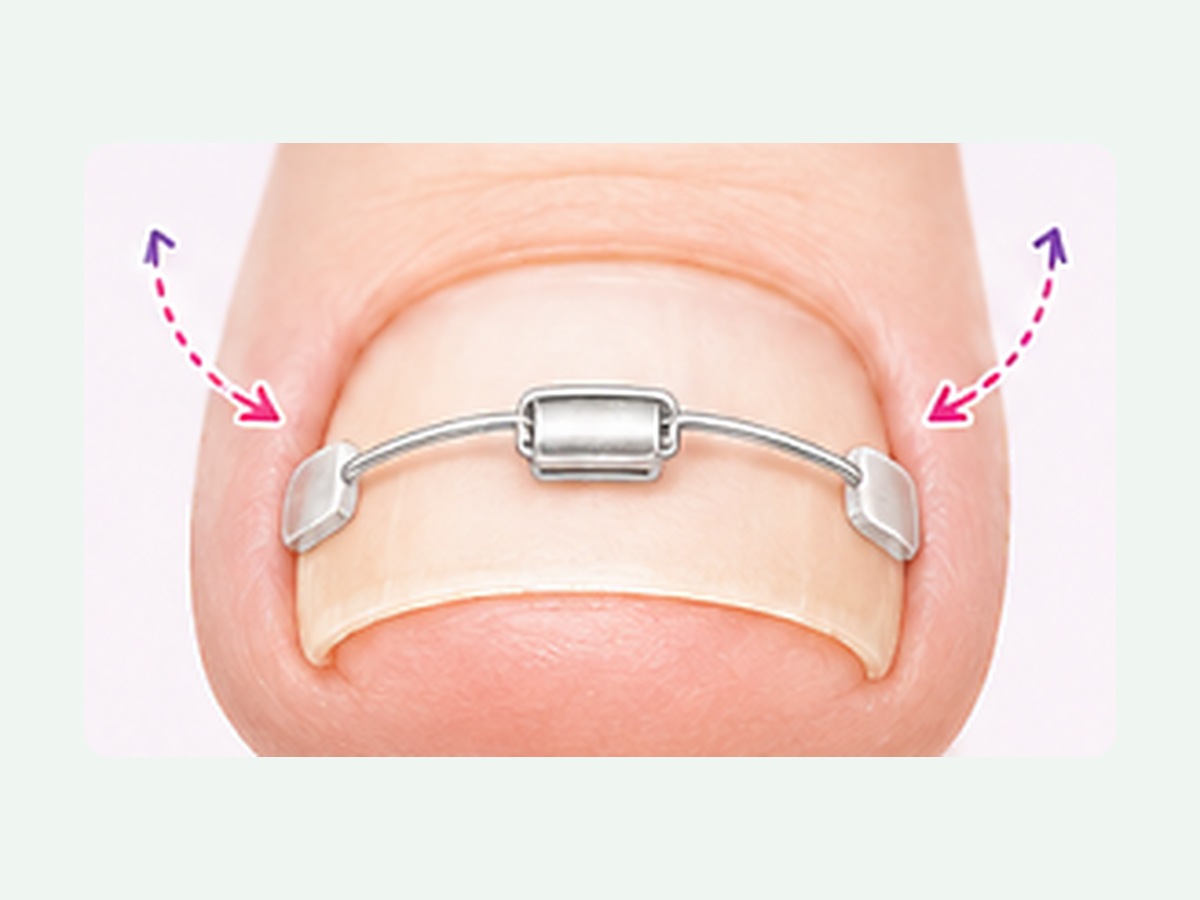
The onycho clip does not remove the nail or cut a large part of it away. A highly elastic shape-memory alloy clip is hooked onto both edges of the nail, and the clip's force as it tries to return to its original shape gradually lifts the curling edges of the nail upward, straightening it out.
Put simply, rather than forcibly cutting the nail away, it is a correction that gradually retrains the direction and shape in which the nail grows.
When clip correction is not suitable
That said, it is not the right method for every ingrown toenail.
- When the nail is too thin and tears easily
- When fungal infection has left the nail crumbling like a shell
- When inflammation is severe and pus is present
- When the flesh is so swollen that the nail edge cannot be seen
In these cases clip correction is difficult, or the inflammation or fungal infection needs treating first. That is why I check nail thickness, the angle of deformity and any inflammation before anything else. Judging whether this method actually suits your nail comes before the procedure itself.
Adjustment cycle and total duration
The two questions I hear most are "how often do I need to come in" and "how many months does it take in total".
| Item | Typical range |
|---|---|
| Visit interval | Once every 3–4 weeks, for a check-up and clip readjustment |
| Correction period | Usually 3–5 months; longer if the deformity is severe |
| Clip wear | Once fitted, the clip stays fixed for about a month until the next visit |
| Procedure time | Around 10–15 minutes, no anaesthesia |
In the early phase we check at fairly short intervals: whether the clip is holding, whether pain is easing, whether there is any inflammation: and as the nail stabilises, the visits gradually space out.
Pain and daily life
Many patients delay treatment fearing it will hurt enough to need anaesthesia. The onycho clip is not a surgery that cuts or incises the nail, so no anaesthesia is used. Apart from a brief tight sensation when the clip is first fixed in place, there is no significant pain, and you can walk out of the clinic right after the procedure.
Because the nail that was pressing into the flesh is lifted upward, most patients find the stinging pain on walking eases from immediately after the procedure.
- Showering: a light everyday shower is fine from the same day
- Baths and swimming pools: environments where the nail soaks in water for long periods are best avoided for about the first week, to help the device stay fixed
- Walking: everyday walking is possible straight away
- Hiking, running, football: repeated strong impact on the tip of the toe can dislodge the device, so holding off in the early phase is safer
Two habits that break the cycle of recurrence
The onycho clip does not just reduce the symptom of pain: it is a corrective treatment that trains the flesh beneath the nail and the nail itself into a flat shape. But if your habits stay the same after correction, the nail can dig in again.
- Trim the nail flat: do not dig the corners deep into the sides: trim so the front edge is straight across
- Comfortable shoes: shoes with a narrow toe box that squeeze the toes from both sides, high heels and elevator shoes are best avoided
Left alone, an ingrown toenail only gets harder to treat as inflammation worsens, the area weeps and secondary bacterial infection follows: it is not a condition that heals on its own. If the pain keeps returning, I would encourage you to have the nail examined.
FAQ
My nail is already deeply ingrown: can a clip alone straighten it without surgery?
It depends on the degree of deformity. If the nail edge is visible and the nail is thick enough, clip correction can be attempted; if inflammation and pus are severe or the flesh is very swollen, we settle the inflammation first and then decide. Examining the nail in person comes first.
Can I go straight back to daily life with the clip on?
Yes. There is no anaesthesia and the procedure takes about 10–15 minutes, so you can walk home right away. For the first week, though, it is better for device fixation to avoid environments like baths and swimming pools where the foot soaks for long periods.
Once corrected, will it never grow in again?
The nail shape is corrected, but if the habit of digging the corners deep when trimming and narrow-toed shoes stay the same, it can grow in again. Changing both the trimming method and the shoes is the condition for preventing recurrence.
What if I also have toenail fungus?
If fungus has left the nail crumbling, the clip cannot be fixed and correction is difficult. In that case we treat the fungus first, or alongside, and check whether the nail reaches a state where a clip can be attached.
2 min walk from Yaksu Stn. Exit 5 (Line 3·6)
Tel 02-2038-0070