
Serum, skin booster, filler: same hyaluronic acid, different jobs
A fair question comes up often: what is the difference between a hyaluronic acid serum, a hyaluronic acid skin booster and a hyaluronic acid filler? The ingredient name is the same, so the confusion is understandable. The answer is where it goes and how much it is crosslinked.

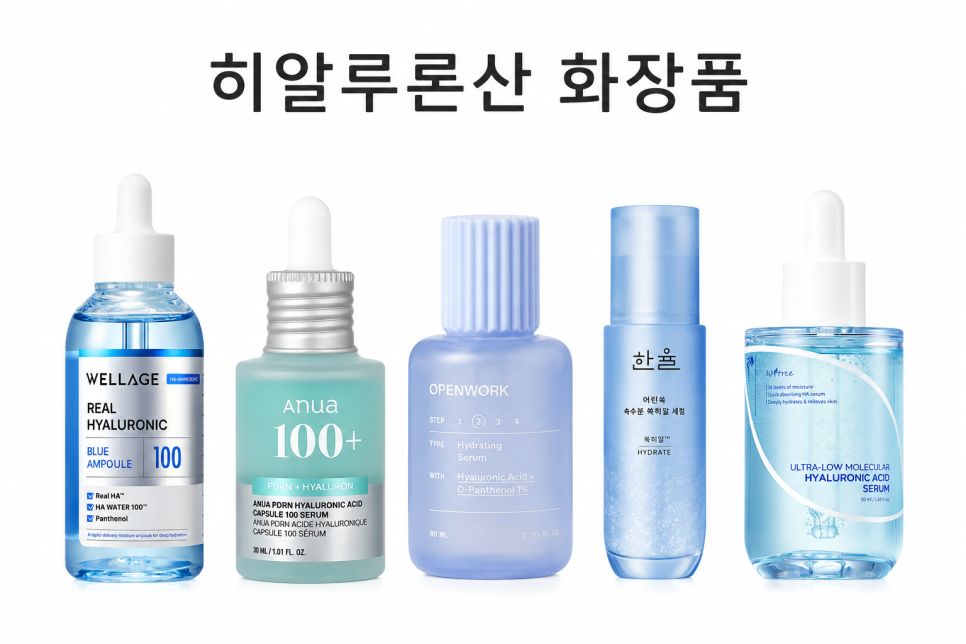
1. Cosmetics: holding water at the surface
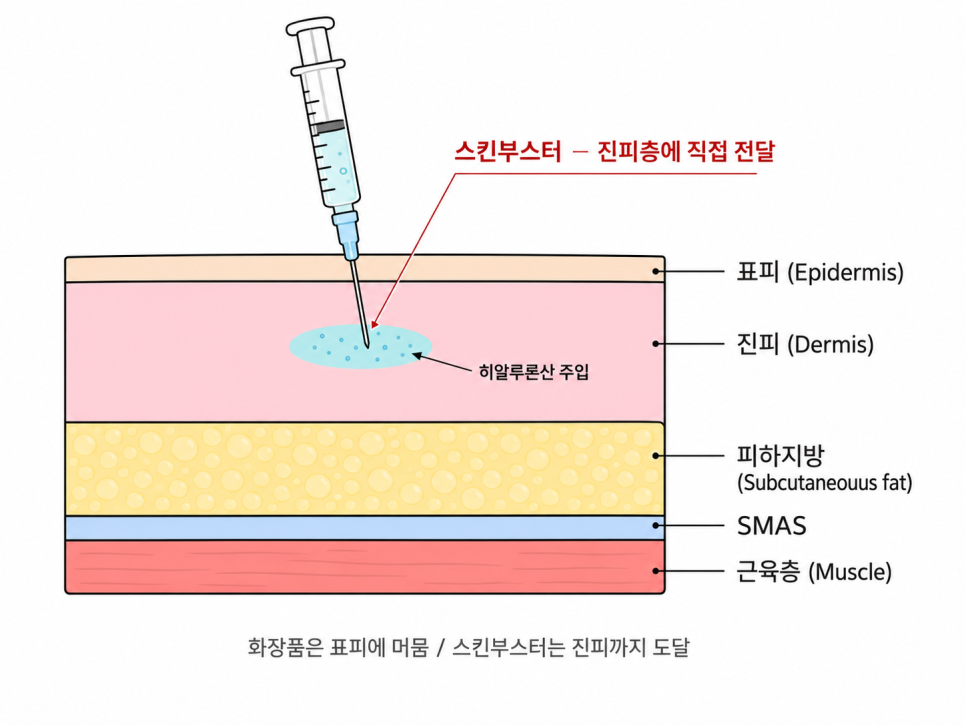
Many people believe low-molecular-weight hyaluronic acid penetrates deep into the skin. It does not, in any meaningful sense. The stratum corneum is a barrier, and most of the hyaluronic acid stays at the surface, drawing and holding water there.
The immediate plumpness after a serum or mist is real. It does not extend to changing skin structure or improving the environment in the deeper layers.
2. Skin boosters: raising water retention inside the dermis
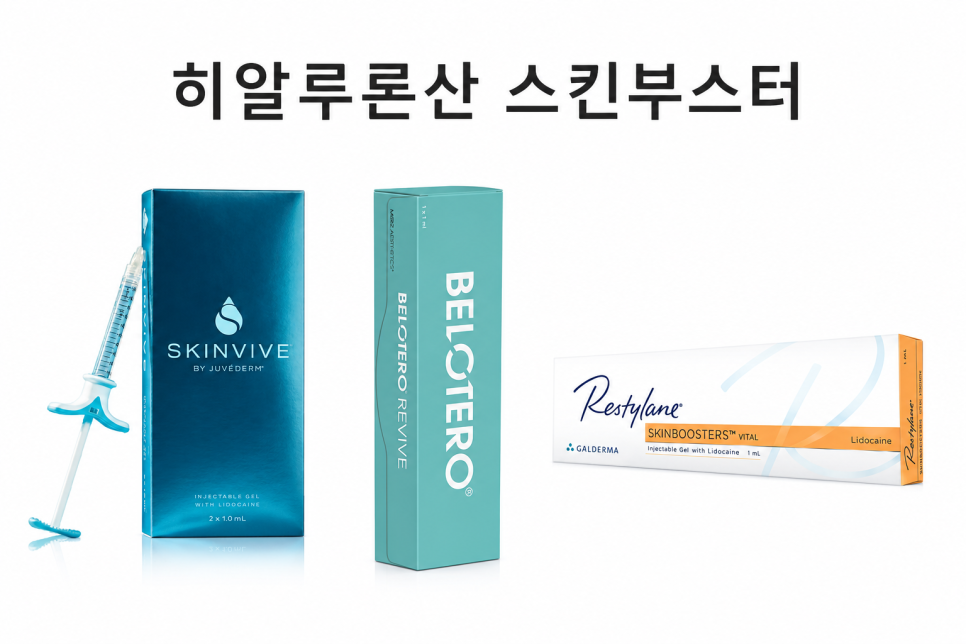
A skin booster differs in how it is delivered. The same hyaluronic acid behaves differently once it is inside the dermis. Hyaluronic acid used in boosters has low viscosity and spreads widely, diffusing through the dermis and creating an environment that stores water.
- Hydration becomes even across the whole area
- Fine lines and rough texture soften
- Texture and light reflection improve
Where cosmetics hold water on the outside, a skin booster raises the water-holding capacity of the skin itself.
3. Fillers: making volume that holds its shape
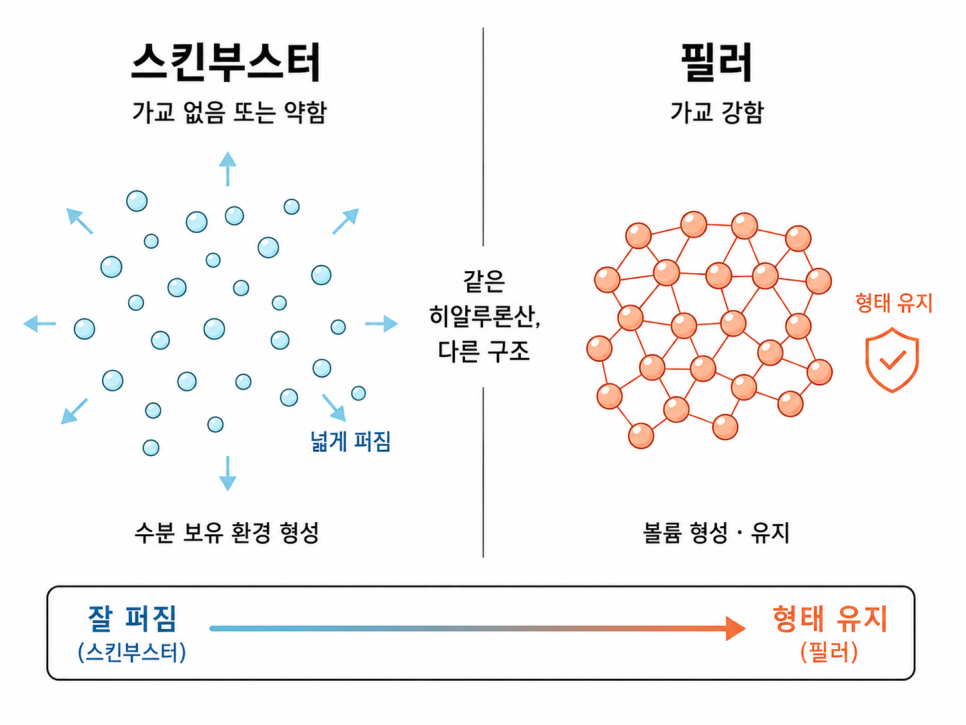
A filler has a different purpose. Hyaluronic acid filler is strongly crosslinked so it holds shape. Crosslinking links the molecules into a mesh, which raises viscoelasticity and gives the material the strength to occupy and hold a space where it is placed.
- Little or no crosslinking → spreads well, suits hydration
- Strong crosslinking → holds shape, suits volume
The boundary is blurring
Treating with skin boosters, you sometimes think: is this not just a filler with low viscoelasticity? That is not entirely wrong. Recent products blur the line. Some boosters are lightly crosslinked, so they neither spread completely nor hold shape like a filler. A little volume appears, and they last longer than expected.
So hyaluronic acid treatments are better understood as a spectrum than a binary.
- No crosslinking → spreads well, hydration-focused, short duration
- Light crosslinking (skin booster) → some spread, improves skin condition, medium duration
- Medium crosslinking → soft volume, between booster and filler
- Strong crosslinking (filler) → holds shape, builds volume, long duration
How to choose
A skin booster suits dry skin with fine lines, dull texture, or when the aim is to improve the condition of the skin rather than build volume.
A filler suits areas that genuinely need lifting: a hollow anterior cheek, a depressed scar, a region short of volume. Hydration alone is not enough; a structure that holds shape is needed.
A caution on depressed scars: the skin is being pulled downward, which is a structural problem. Creating and holding the space is essential, so a skin booster alone has limits.
Frequently asked questions
What is the difference between a skin booster and a filler?
The degree of crosslinking. A booster has little or none, so it spreads through the dermis and raises water retention. A filler is strongly crosslinked, so it holds shape and builds volume. Same ingredient, different purpose and structure.
Why is a serum not the same?
The delivery route differs. A serum sits on the skin, and the stratum corneum prevents meaningful delivery to the dermis. Boosters and fillers are injected into the dermis and act on the structure itself.
Will a skin booster add volume?
It depends on the product. Uncrosslinked boosters focus on hydration rather than volume. Lightly crosslinked products can produce a little. If clear volume is the aim, a filler is appropriate.
How long does it last?
It varies with crosslinking and placement, but generally three to six months. The stronger the crosslinking, the longer it holds.
1 min walk from Dunchon-oryun Stn. Exit 1 (Line 9)
Tel 02-488-9119