
Home beauty devices: what I learned using them myself as a dermatologist
Home-use beauty devices and medical devices are designed for different purposes from the start. They are a supplement to procedures, not a replacement. I do not actively recommend home HIFU or RF devices, while low-intensity ultrasound types such as LDM are comparatively reasonable. And I do not recommend using a retinol ampoule together with a device. Hydrating, soothing ampoules are the better match.

These days I get a lot of questions about home-use beauty devices in my consultation room.
- "Is it safe to use this kind of device at home?"
- "Does it work like the treatments I get at a dermatology clinic?"
- "Is it better if I use it with an ampoule?"
When a new device comes out, I often buy one myself out of curiosity and try it at home. Using them first-hand lets me explain them to my patients more accurately.
Recently, though, while reading reviews of a home device I had bought, some of them worried me. The problem did not seem to be the device itself: they looked like cases of dermatitis or irritation caused by how the device was used, or by the cosmetics used with it.
So today I would like to go over what to watch out for when using a home-care device.
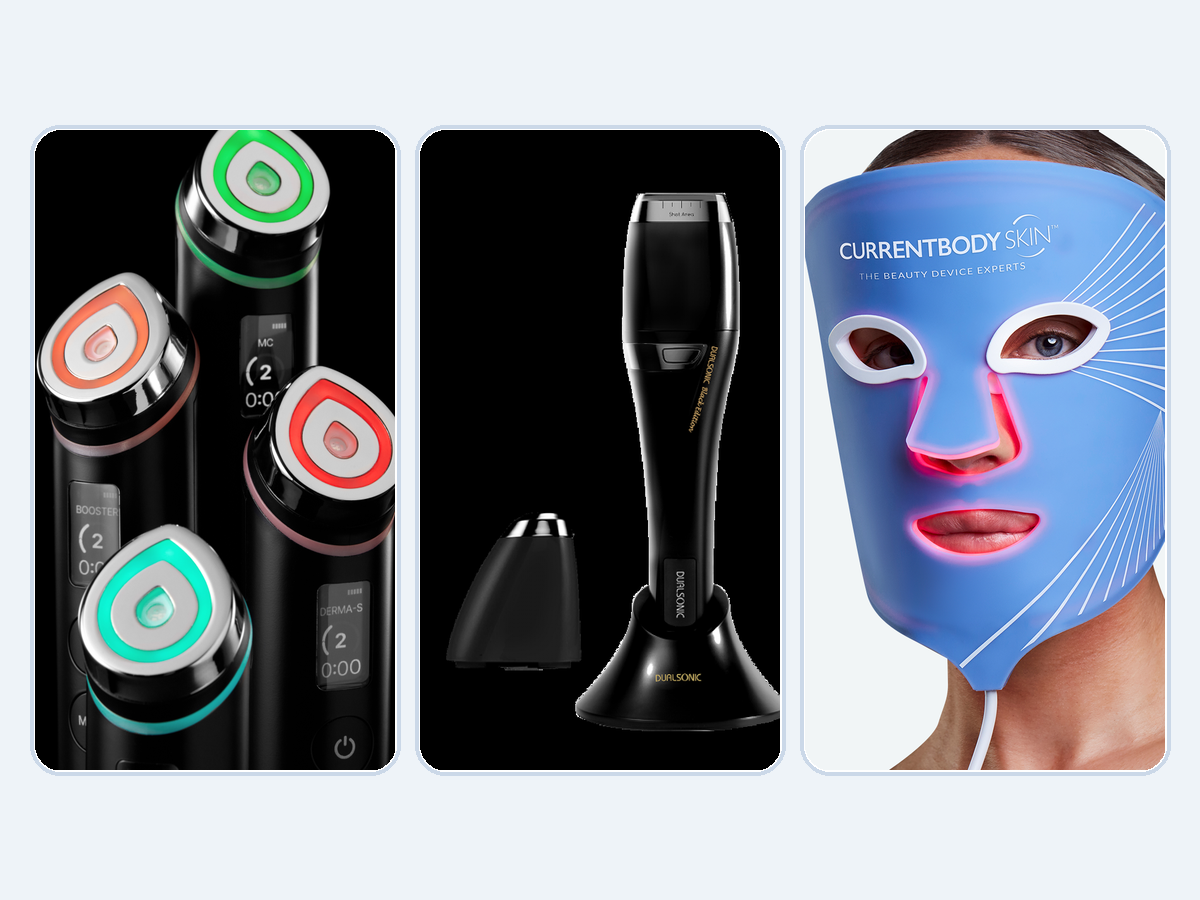
Home-use devices have clear limits
The first thing to understand is that home-use devices and the medical devices used in dermatology clinics are designed for different purposes from the start.
Energy-based devices such as HIFU or RF used in clinics generate heat deep in the skin or apply a controlled level of stimulus to the tissue to achieve a treatment effect. As the energy increases, however, it is not only the effect that grows: the possibility of unwanted side effects such as burns, fat atrophy and nerve damage grows with it. The US FDA has in fact issued a safety communication about reports of burns, scarring, fat loss and nerve damage with cosmetic RF microneedling.
Even devices operated by experienced dermatologists can cause burns and other side effects if skin thickness, treatment area, delivery technique or energy settings are misjudged.
So what happens when an ordinary consumer uses such a device at home? Naturally, the manufacturer has to put safety first so that nothing goes wrong even in non-professional hands. Home devices therefore cannot aim for the same level of energy and treatment effect as the equipment used in medical settings.
This does not mean home devices are bad. It means it is important to see them as a different kind of product from medical devices in the first place.
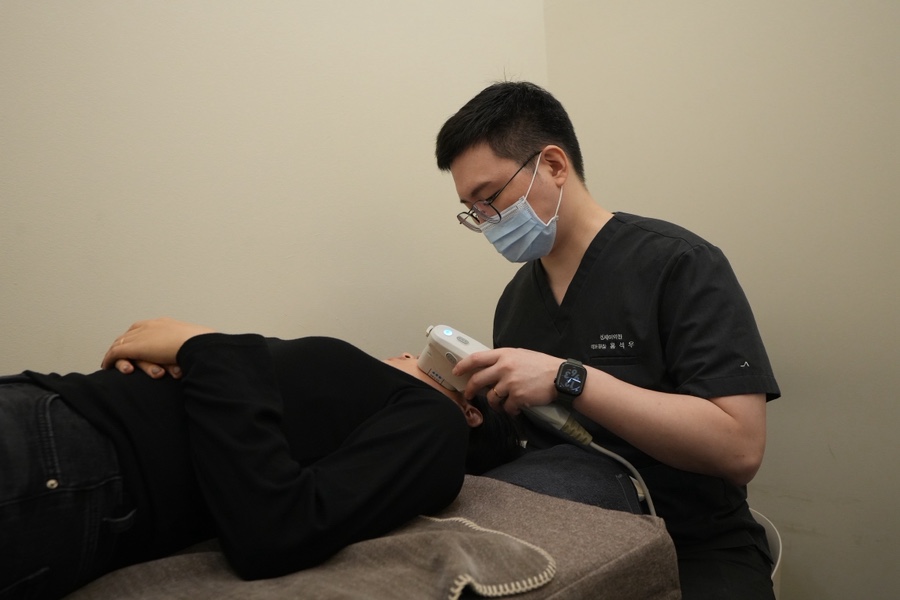
What about home HIFU and RF devices, then?
Personally, I do not actively recommend home-use HIFU or RF energy devices.
The reason is simple. A certain amount of energy is needed for a meaningful treatment effect, but the higher the energy, the higher the chance of side effects. Conversely, if the output is limited for safety, you cannot expect the same level of effect as a medical procedure performed at a clinic.
RF and ultrasound devices are also not an area where "higher output is simply better." What matters is where the energy is applied, how much, and in what way.
So when choosing a home device, I recommend thinking of it not as "doing a clinic procedure at home" but as a supplementary tool for managing your skin condition.
LDM-type devices, by contrast, suit home care relatively well
Which home devices do I view relatively positively, then? I think low-intensity ultrasound devices such as the LDM type are comparatively reasonable.
| HIFU·RF-type home devices | LDM type (low-intensity ultrasound) | |
|---|---|---|
| How it works | Imitates lifting through high-intensity thermal injury | Physical stimulation of the skin with ultrasound |
| To be effective | Needs high energy; home units are limited | High output is not the goal in the first place |
| Burden on the skin | Raising output brings side-effect risk with it | Relatively low |
| Suited for | Not something I tend to recommend | Post-procedure care · hydration and soothing |
LDM-type devices are not primarily about creating high-intensity thermal damage to lift the skin; they use ultrasound to give the skin physical stimulation. Compared with high-output RF or HIFU they place relatively little burden on the skin, and a properly designed product can work well for home care.
These devices are especially suitable for keeping the skin comfortable after clinic procedures, or for hydration and soothing care.
That said, output and method vary from product to product, so do not assume that everything carrying the LDM name is the same.
What worried me more than the device was the retinol
Looking through reviews of an LDM-type home device I recently bought, I noticed something interesting. Among the samples bundled with the device, reviews reporting dermatitis after using the retinol product kept appearing.
I found this a little puzzling at first. Retinol is an ingredient we use to great effect in dermatology. It regulates keratinisation and skin-cell differentiation, and over time it can help with skin texture, fine lines and pigmentation.
At the same time, however, it is an ingredient with irritation potential. The American Academy of Dermatology (AAD) also advises that irritation can occur in the early stages of retinoid use. First-time users and people with a weakened skin barrier in particular may experience dryness, stinging, redness or flaking.
But when you combine that retinol with a home-care device, the story can change.
What if you apply retinol and rub a device over it?
With a home ultrasound device, you apply a gel or ampoule to the skin and then move the device over it repeatedly. Compared with simply applying retinol, this means physical stimulation is added on top of the cosmetic irritation.
Ultrasound devices may influence skin permeability and the movement of substances, but it is not appropriate to reduce this to a blanket claim that they "absorb the ampoule deep into the skin."
The important point lies elsewhere. Retinol is already an ingredient with irritation potential, so is there really a reason to add extra mechanical stimulation on top of it?
You need to be especially careful if your skin is sensitive, or if your skin barrier is weakened after a recent clinic procedure such as laser or RF.
So personally, I do not recommend using a retinol ampoule together with a home-care device. Retinol is best used in your regular skincare routine, adjusting to how your skin responds.
Which ampoules are a better match?
If you use these home devices, I would instead recommend ampoules aimed at hydration and soothing: products built around low-irritation moisturising ingredients such as hyaluronic acid, glycerin and panthenol.
Rather than thinking of a home device as "a machine that pushes good ingredients deep into the skin," it is better to think of it as "a comfortable way to care for the skin while giving it plenty of lubrication and hydration."
This applies even more right after a clinic procedure such as laser, RF or HIFU. When the skin has already received plenty of stimulation, rather than coming home and using a strong device on top of it, focusing on hydration and soothing so the skin barrier can recover is far more sensible.
Things worth remembering when using a home-care device
- Do not try to reproduce clinic procedures at home. Home devices are not meant to replace medical equipment. Think of them as a way to care for your skin safely
- Be more cautious the more a product emphasises "powerful results." For a product used by non-professionals, how safely it can be used matters more than how powerful it is
- Rest on days when your skin is not doing well. If the barrier is damaged, with redness, dermatitis, flaking or stinging, it is better to skip the device altogether
- The cosmetics you use with it matter too. Ingredients with inherent irritation potential, such as retinol, AHA or BHA, do not need to be used at the same time as a device
- Set the goal of home care as "management," not "treatment." If you expect a procedure replicated at home you will likely be disappointed; as a supplement for maintaining skin condition, satisfaction is much higher
In the end, what matters is not how strong it is
Search for home-care devices and you will easily find advertising phrases like "same results as a dermatology clinic," "high output," "deep absorption" or "at-home lifting."
From a dermatologist's point of view, however, stronger is not always better. Treatments that apply heat or physical stimulation to the skin need a degree of balance between effect and side effects. That is why in the clinic we decide on energy and delivery method after considering the patient's skin condition, the treatment area and skin thickness. With a home device the user cannot easily make those judgments, so a safety-first design matters from the outset.
So when choosing a home-care device, I hope you will look first not at "how powerful is it?" but at "how safely and consistently can I use this on my skin?"
And just because an ampoule comes bundled with a device does not mean you have to use them together. As in the reviews I saw recently, the device itself may be fine while the cosmetics used with it caused the dermatitis.
Home care is best understood not as a substitute for dermatological treatment but as a supplementary way to manage your skin condition consistently.
FAQ
Can a home device give the same results as a clinic lifting procedure?
Home devices are output-limited with safety as the priority, so you cannot expect the same level of effect as HIFU or RF procedures performed in a medical setting. It is better to think of them as a supplementary tool for managing your skin condition.
Why shouldn't I use a retinol ampoule with the device?
Retinol already has irritation potential, and adding the device's repeated physical stimulation raises the chance of an irritant reaction. On device days use a hydrating, soothing ampoule, and use retinol in your regular skincare routine while watching how your skin responds.
Can I use a home device right after a clinic procedure?
Right after laser, RF or HIFU the skin barrier is weakened, so I do not recommend it. Focus on hydration and soothing, and it is safest to check with the clinic that treated you about when to start again.
Is every device labelled LDM fine?
Output and method vary by product, so the name alone is not enough to judge. Check whether it is genuinely a low-intensity design and whether the conditions of use are clearly stated.
What should I do if dermatitis develops while using a device?
Stop using the device and focus on moisturising; if symptoms persist, see a doctor. It also needs to be established whether the cause was the device or the cosmetics used with it.
1 min walk from Dunchon-oryun Stn. Exit 1 (Line 9)
Tel 02-488-9119