
Why the length of a HIFU result is hard to put in one number
Rather than fixing the duration of a HIFU result at one number, it is more accurate to separate out how the lifting changes over time. In the early weeks heat makes the tissue contract and the pull appears quickly; after that the change comes from tissue recovery and collagen remodelling. The figure I work with is roughly four to six months, and I would treat that as one care cycle. Both the "a whole year" answer and the "repeat every two months" answer are looking at one half of it.

Patients ask about this at almost every Coolsonic consultation. Search for it and one clinic says two to three months, another says about six, and some pages say a year. Which one is right?
My own view is that rather than settling on a single number, it is far more accurate to separate out how the lifting changes as time passes after the treatment.
Why the same treatment gets different answers
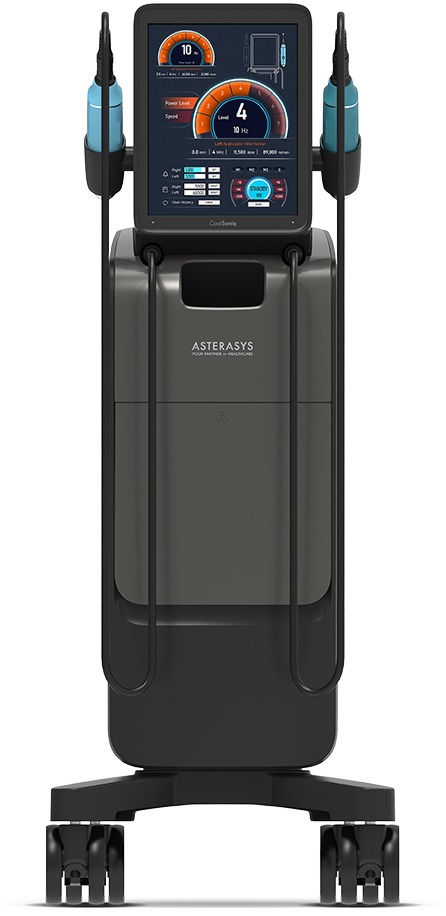
Coolsonic is a lifting device that uses HIFU, high intensity focused ultrasound. It concentrates ultrasound energy at a set depth in the skin to create coagulation points, and through that draws out tissue contraction and the collagen remodelling that follows.
What matters here is that not every part of the lifting result is held in place by the same mechanism. The tightness you feel in the first weeks and the change still there a few months later were made in different ways. Much of the disagreement about duration is simply a matter of which of the two was being counted.
What happens in the first two to three months
Early on, heat contracts the tissue and you can feel a relatively quick pull or see a change in the line of the face. That early change does not stay permanently, though. Tissue goes through a recovery process, and the heat driven contraction gradually eases off.
Having done a great deal of Ulthera, the most established HIFU device, what I notice is that if you look only at the visible tightening that appears first, the change is largest over roughly two to three months and settles into something more natural after that.
The shape that follow up studies show
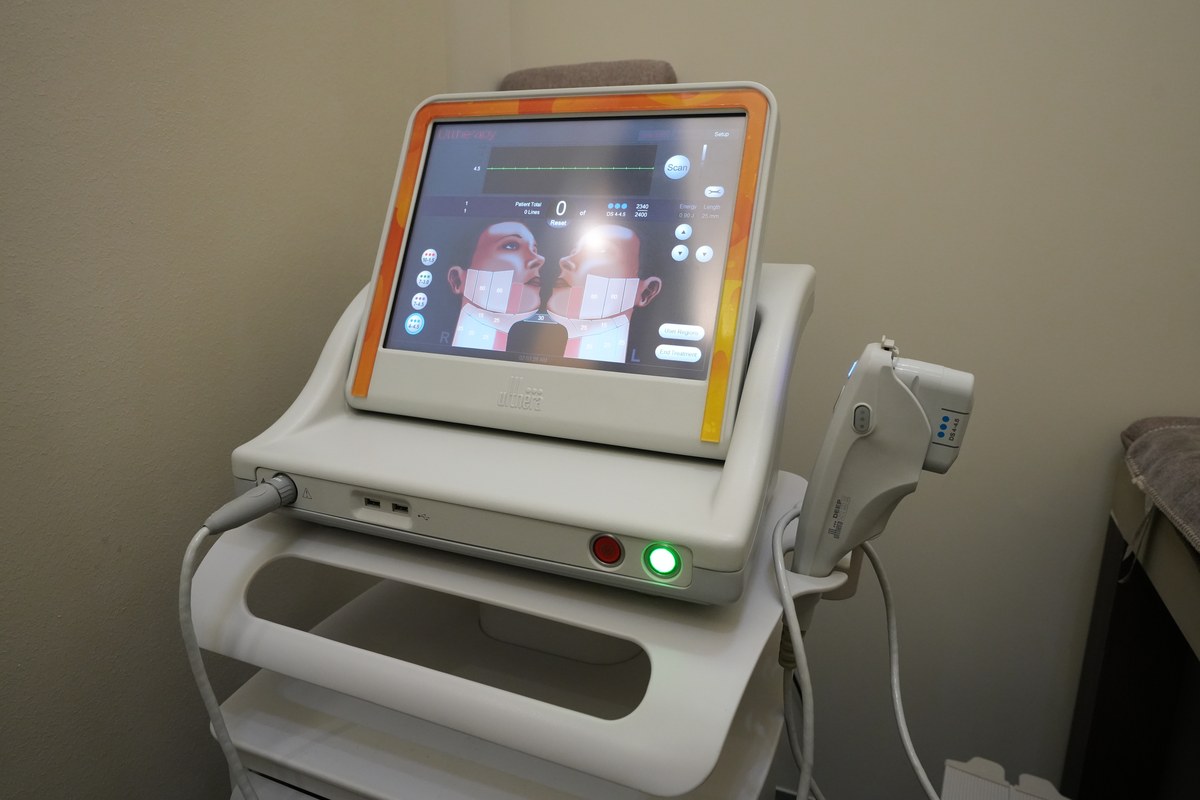
I am cautious about arguing from my own experience alone, so I read it alongside studies that tracked ultrasound imaging HIFU at set time points. One prospective study treated 25 Asian patients with 800 lines across the face and neck and measured them with three dimensional imaging on day 0, day 90 and day 180.
At day 90 the submental area had lifted by an average of 26.44mm², which was statistically significant (p=0.0217), and the brow had lifted by an average of 0.47mm (p=0.0165). By day 180 the submental figure had fallen to 13.76mm² and significance was not confirmed at that point (p=0.243). The brow sat 0.12mm lower than at the start. The paper concludes that a further treatment can be considered three months after the first.
A review that gathered 11 papers on satisfaction after HIFU shows the same shape. At day 30 and day 90 about half reported a large improvement; by day 360 most had returned to where they started. In a systematic review of 16 papers, the point where assessments cluster was also day 90.
One thing to set down clearly. Those studies were run on ultrasound imaging devices and none of them studied Coolsonic. A different device means a different focal size and a different delivery pattern, so the numbers cannot be carried across. I use them only to see the shape the effect takes over time.
| Study | Design | What it shows |
|---|---|---|
| Dermatol Surg 2017 (PMID 28945618) | Prospective, 25 Asian patients, 800 lines, 3D imaging | Submental lift significant at day 90, not confirmed at day 180 |
| J Cosmet Dermatol 2023 (PMID 37128835) | Narrative review of 11 papers | About half improved at day 30 and 90, most back to baseline by day 360 |
| IJERPH 2023 (PMID 36674277) | Systematic review of 16 papers, 337 patients pooled at day 90 | Brow 0.47–1.7mm, submental 26–45mm² reported |
| Lasers Med Sci 2026 (PMID 41986762) | Prospective, 20 Chinese patients, 6 month follow up | A single session followed through to six months |
Passing three months does not mean the result is gone
None of this means the treatment stops working after three months. If anything, from that point on the recovery of tissue around the coagulation points and the change from collagen remodelling take up the larger share.
Collagen remodelling does not suddenly begin exactly at month three, of course. Tissue recovery starts relatively early and runs over weeks to months. What changes is that, as time passes, remodelling and regeneration matter relatively more than the immediate contraction did.
So instead of saying a result "lasts so many months", I would rather account for both the early tightening and the collagen remodelling that runs on for months afterwards.
Repeating on a short interval against working in longer cycles
This is the point that matters when duration comes up. Among HIFU devices there are plenty approached as short interval care, repeated often. You get the pull quickly, but because the early change falls away it is common to come back every one or two months, or every few months.
Coolsonic I would rather not treat as a device you go to purely for immediate tightening over a short window. What separates it is that after a single session you can expect tissue change and collagen remodelling to carry on over months.
Devices cannot all be lumped together for a duration comparison, naturally. The device, the energy, the number of shots and the depth are all different.
The figure I actually work with
The realistic duration I work with for Coolsonic is about four to six months. Over the first two to three months heat driven contraction and tissue recovery run together and you notice the facial line and the firmness change; after that collagen remodelling carries the lifting on.
So "you have to repeat Coolsonic every two months" is a description I find a little short. If you judge it only by the visible early tightening you might feel that way, but HIFU cannot be assessed on the early pull alone.
On the other side, "one session and it holds for a full year" is a description I would be careful about applying to everyone. Skin keeps ageing after a treatment. Weight and fat change, and skin sags at a different rate in different people. Some people stay happy with it past six months, but I cannot tell everyone the same year long figure.
So when I explain how long Coolsonic lasts, I find it most realistic to say think of four to six months as one care cycle.
What I look at when setting the next session
After a first session I tend to wait two or three months, see how it has settled, and set the interval then. The layer the sagging started in differs, and so does the response to the first session, so even within the same four to six months the better moment to come in is not the same for everyone.
The rate it comes back is uneven across the face as well. A shaded area such as under the jaw shows first even when it has come back by the same amount, while the middle of the cheek shows later. So rather than putting the same shots back into both sides, I decide by which plane came back first.
There are also cases where I lengthen the interval. In someone whose main problem is lost cheek volume rather than sagging, frequent HIFU can make the face look more drawn. There I do not pull the cycle in; I look at volume first.
How long it lasts is set by how far your face has come back, not by a number attached to the device. Bring the date of your last treatment to the consultation, look at it against where things stand now, and set the next point from there.
Frequently asked questions
How many months does a Coolsonic result last?
It is hard to answer with one number. The early heat driven contraction changes most over two to three months and then settles into something more natural, and after that the change from collagen remodelling carries on. Taking both together, think of about four to six months as one care cycle.
Do I need to repeat it every two months?
If you judge only by the visible early tightening you might feel that way, but HIFU is hard to assess on the early pull alone. Putting sessions back to back in the same area also overlaps the recovery, which makes it hard to tell what the improvement came from.
Does one session hold for a year?
That is a description I would be careful about applying to everyone. Ageing continues after the treatment, and weight, fat and the rate of sagging differ from person to person. A review tracking ultrasound imaging HIFU found that by day 360 most had returned to where they started.
Does the effect disappear after three months?
No. The early contraction eases off, but from around then the recovery of tissue and the change from collagen remodelling take the larger share. Remodelling does not begin abruptly at month three either; it starts early and runs over weeks to months.
Can I book the next session in advance?
I do not set the next date on the day of treatment. I see how it has settled after two or three months and set the interval then, because the layer the sagging started in and the response to the first session differ from person to person.
My cheeks are on the hollow side. Can I shorten the cycle?
I would not recommend it. When volume loss matters more than sagging, frequent HIFU can make the face look more drawn. In that case I lengthen the interval and look at volume first.
1 min walk from Dunchon-oryun Stn. Exit 1 (Line 9)
Tel 02-488-9119