
Switching to azelaic acid when other acne treatments sting
Azelaic acid is not the gentlest acne treatment there is, but it is the one you can retreat to when irritation appears. It works on blocked pores, on the bacteria and on inflammation at the same time, with no photosensitivity and no problem of tolerance. What it will not do is fade the red marks acne leaves behind. If you do not separate the brown marks from the red ones, you will apply it for three months and feel that nothing has changed.

Some patients come back about two weeks after being prescribed an acne treatment looking like this: the cheeks are red, the skin around the mouth is flaking, and the acne itself is unchanged. They rub a cheek with the back of a hand and say the treatment does not suit them.
On days like that I do not tell them to stop. I look first at swapping. Acne is a condition you have to keep treating for months, so once irritation appears, a long stretch of applying nothing takes you back to where you started.
Azelaic acid is what I reach for often at that point. Here I want to write about what actually changes once you start applying it, rather than repeat what the ingredient is and where it acts.
Switching to azelaic acid after a retinoid has caused irritation
Retinoids such as adapalene and tretinoin are the backbone of acne treatment. Dryness, flaking and stinging in the first few weeks are common, and usually that is a phase you pass through. Some patients cannot get through it. When red cheeks and stinging on washing carry on past three weeks, I do not push on regardless.
There is a reason for moving to azelaic acid at that point. A retinoid acts directly on how keratinocytes differentiate, while azelaic acid divides its work between blocked pores, the acne bacteria and inflammation. It is less a matter of strength than of how the skin copes with it. Azelaic acid stings at first too, but it rarely arrives as red peeling.
There is one more thing. Azelaic acid is not photosensitising. A retinoid can make the skin more sensitive to sun, which is awkward when it overlaps with a trip, and azelaic acid carries less of that worry. For patients who come in summer or who have a lot of outdoor plans, this difference matters more than it sounds.
| Retinoids | Benzoyl peroxide | Azelaic acid | |
|---|---|---|---|
| Irritation in the first weeks | Dryness and flaking are common | Dryness and bleached patches | Mostly stinging |
| Sun sensitivity | Can increase | Little effect | No effect |
| Limits on long term use | Not for use in pregnancy | Bleaches clothes and towels | No tolerance problem |
| Action on brown marks | Indirectly helpful | Almost none | Acts directly on pigment |
What separates the 15% gel from the 20% cream
Some patients want the exact formulation they used at home. Which strength and which base are common varies by country. The 20% cream has been used for acne for a long time, while the 15% gel came through as a formulation licensed for redness and rosacea. What you see in Korean pharmacies is usually the 20% cream.
Higher is not automatically better. A cream sits heavily and feels stifling on oily skin, while a gel is light but stings more on dry skin. I suggest the lighter base for people whose forehead and nose go shiny, and the cream for people whose cheeks tighten first. That choice, more than the percentage, decides whether you keep using it.
Which acne mark azelaic acid works on, the brown or the red
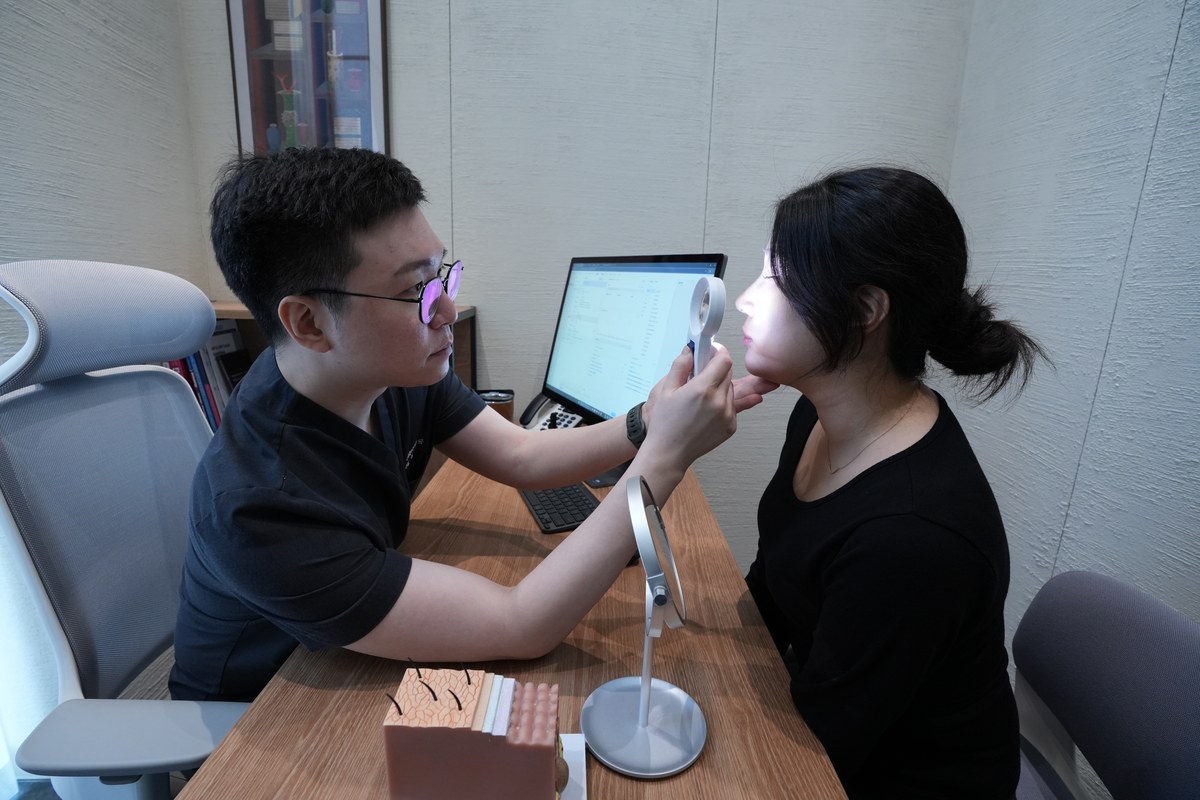
Plenty of patients come in once the acne has settled, bothered by the marks. Here I look in the mirror with them and separate two things first. I ask them to press a mark gently and let go. If the colour disappears under the finger and comes back, it is a red mark. If the colour stays under pressure, it is a brown mark.
What is left behind differs. A brown mark is melanin sitting where inflammation passed through, while a red mark is a vessel widened during the inflammation that has not narrowed back and still shows through. Azelaic acid acts on the enzyme that makes melanin, so it helps the first and does not reach the second.
Without that explanation, a patient with red marks applies it for three months and comes back saying it did nothing. The treatment did not fail; we were looking at the wrong thing from the start. Red marks are handled with lasers that respond to blood vessels.
What you see at four weeks and what you see at twelve
Almost everyone asks when it will start to improve. Azelaic acid follows an order. Stinging and dryness come first, in the first two weeks. From around week four the number of new spots starts to drop. The small bumps already there clear between weeks six and eight.
Brown marks come last. The epidermis takes time to turn over, so it is three months before photos can be compared. Which means patients who give up at week four end without ever seeing the best part of this treatment.
I go through this order when I prescribe. Knowing when each thing shows up, you get through the stinging fortnight; not knowing, you throw the tube away during it.
Building up while keeping irritation down
The leaflet says twice a day. Apply it that way from the start and most people stop in the first week because it stings. I tell patients to start every other evening only. Get through two weeks that way, move to once daily, and two weeks after that add the morning.
I set the order of application too. Applying it while water is still on the face stings more. Wait until the face is dry, and on thin areas such as the cheeks you may put a thin layer of moisturiser down first and apply on top. Patients worry that less will be absorbed, but keeping to it wins.
They ask about the amount as well. A pea sized amount covers the whole face. Many people dab it onto individual spots, but this treatment does more to reduce what comes next than to clear what is already there. Spread it thinly across the whole area where you break out.
What not to use alongside azelaic acid
Many patients layer several actives now. Going through a list of products in consultation, retinol, an AHA and vitamin C often turn up in the same line. Add azelaic acid on top and there is no way to work out what is causing the stinging.
So at the start I ask patients to keep cleansing, moisturiser and sun protection and nothing else. Rest exfoliating products for at least two weeks, and drop scrubs and peeling pads altogether. If you are going to use a retinoid alongside, split them between morning and evening, and add it only after azelaic acid has settled in.
Using azelaic acid for redness and rosacea
Patients whose cheeks are red with fine bumps on top often assume it is acne. But if there are almost no blackheads and the face flushes hard when they get warm, I look at rosacea rather than acne. Azelaic acid is used here as well.
Skin with rosacea is sensitive to begin with, so the stinging is felt far more strongly. In that case I start even less often than every other day, and I always go through the method of laying moisturiser down first. I also say that the redness itself takes longer to fade.
The acne azelaic acid will not clear
Some patients have firm painful lumps along the jawline and neck, with a new one appearing beside the last before it has healed. Handing that patient azelaic acid alone wastes months. A topical does not reach that depth.
In that case I raise oral treatment or isotretinoin first. Inflammation deep enough to scar makes time itself the cost, and choosing the gentler option can mean missing the window and leaving scar treatment for later. That is why I do not choose a treatment on gentleness alone.
When to stop azelaic acid
Patients often ask how much stinging is normal. I split it three ways. Stinging for about ten minutes after application that then settles is fine to carry on with. Redness still there the next morning means cutting the frequency. Weeping or swelling that reaches the eyelids means stopping that day and coming in.
The other criterion is time. If you have applied it without irritation and the number of new spots is unchanged at twelve weeks, I do not make the treatment stronger; I change direction. Escalating a treatment that is not working and adding only irritation is the most common mistake in acne care.
When to restart it after a procedure
Some patients restart the treatment the day after a laser or microneedling session. Straight after a procedure the skin barrier is open, so it stings far more than usual, and that irritation can leave pigment behind.
I set the restart date according to what was done. About three days after a treatment that only worked on texture, and after the crusts have all come off if crusting was expected. In between, moisturiser and sun protection are enough. Resting the treatment for that period does not undo what you built up before.
What to check if you are buying it in Korea
At the end of a consultation some patients want to buy several tubes to take home. How this ingredient is classified varies by country, so there are places where it needs a prescription and places where a pharmacy sells it directly. In Korea you can get it at a pharmacy.
Before increasing the number of tubes, there is something to check. One tube applied to the whole face usually lasts about two months. And it takes two weeks of use to know whether it suits your skin, so buying several at once leaves you with the rest if it does not. I say start with one and watch for two weeks.
If you are pregnant or planning to be, show me the full list of what you are taking. Azelaic acid is one of the topicals considered during pregnancy, but the judgement changes depending on what else you are using.
Frequently asked questions
Will azelaic acid make my face lighter?
It is not a treatment that lightens normal skin colour. It acts mainly where too much pigment is being made, so acne marks and patches look lighter while the skin around them does not go pale.
Can I use it in summer?
It is not a photosensitising ingredient, so the season does not matter. If you are using it to fade brown marks, keep up sun protection alongside. Apply it and take sun anyway and the marks darken as fast as they fade.
How long do I have to use it before I can stop?
Stopping the moment the acne clears often brings it back. Once you are in a good place I suggest cutting to once daily or every other day and keeping it going for several more months. It is not a treatment limited by tolerance, so it can be used this way.
I broke out more after starting it
Early in treatment, what was already blocked can come to the surface. It usually settles within four weeks. If it is itchy and the redness is spreading, though, that may be an irritant reaction and needs to be told apart.
Can I use it with other acne treatments?
Sometimes we combine them. But it is better to use azelaic acid alone for the first two weeks. Start several at once and when irritation appears there is no way to tell what caused it, and most people end up stopping everything.
1 min walk from Dunchon-oryun Stn. Exit 1 (Line 9)
Tel 02-488-9119