
Forehead comedones in a child: what can actually be prescribed
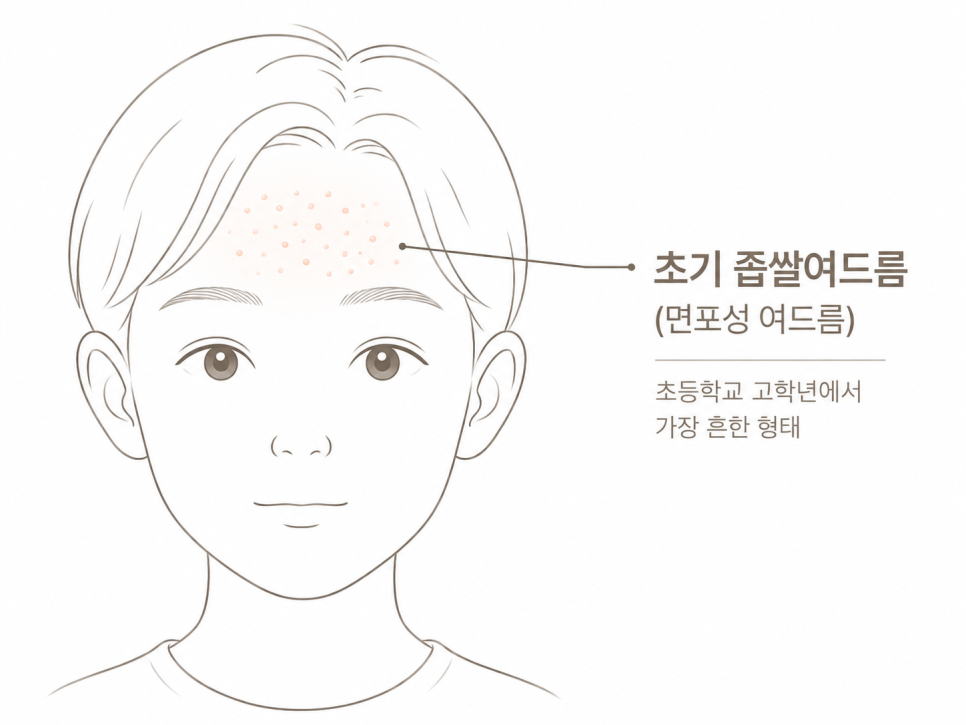
Acne is thought of as starting after puberty, but forehead comedones from primary school age are not rare. What matters in treating a child is that the approved options differ by age. Product names differ by country, so this uses the ingredients.

Under nine: routine before medication
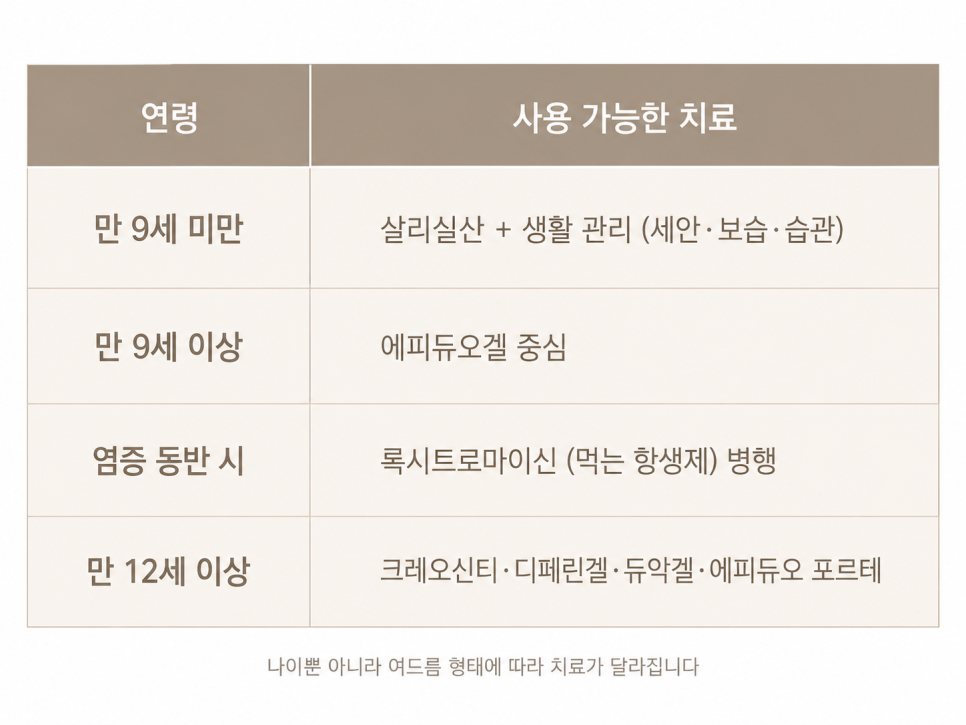
Very few acne treatments can be used under the age of nine. True acne is uncommon at this age, and safety data for most acne drugs is not sufficient. On approval terms, salicylic acid preparations are effectively the option available.
So at this stage the emphasis is on correct cleansing habits, a low-irritation moisturiser and lifestyle rather than medication.
Using an adult acne product on a child this age risks irritation and adverse effects. It should follow an examination.
From nine: adapalene with benzoyl peroxide
At nine the options widen. The combination of adapalene and benzoyl peroxide is approved for children from nine years.
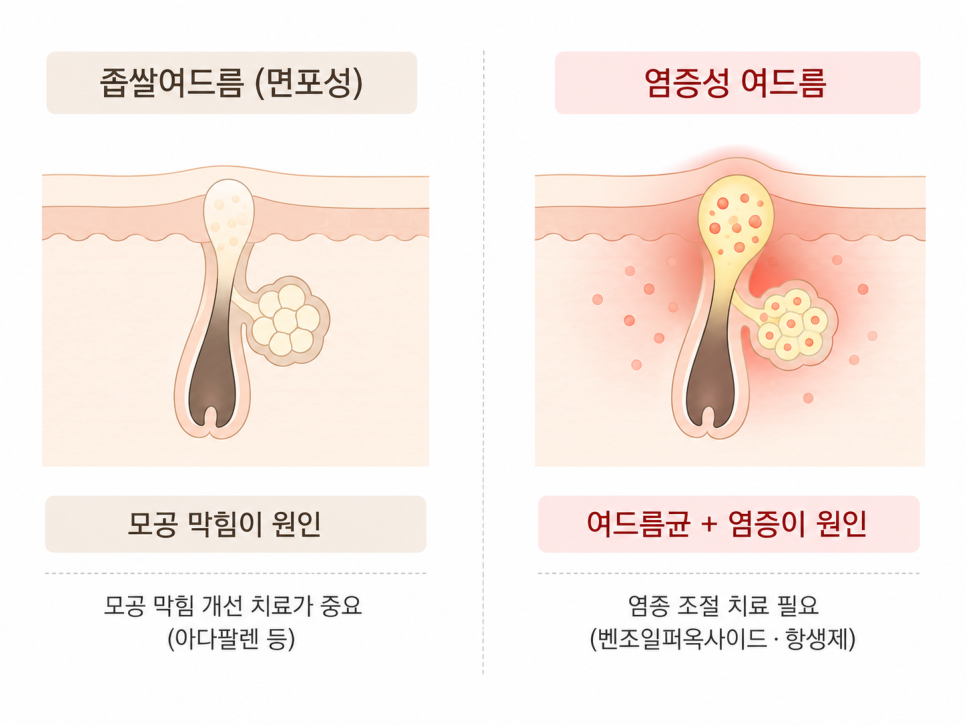
- Adapalene normalises excessive keratin formation at the pore opening, reducing comedones
- Benzoyl peroxide suppresses acne bacteria and reduces inflammation
That suits early comedones on the forehead and mild inflammatory acne, which is the most common pattern in older primary school children. Improving the blockage matters more here than an antibiotic.
Children’s skin is more sensitive than adults’. Rather than daily from the start, two or three times a week, increasing as the skin adapts.
With significant inflammation: an oral antibiotic
Where inflammatory acne is also present, an oral antibiotic may be added. A macrolide such as roxithromycin is used with age in mind, as an option instead of the tetracycline class, which is restricted in younger children.
From twelve
The range widens considerably. Topical clindamycin reduces papules and pustules but does little for comedones themselves, so long-term use alone is not recommended. Adapalene alone suppresses pore blockage and suits comedonal acne or maintenance. Clindamycin with benzoyl peroxide suits inflammatory acne with pustules. A higher-concentration adapalene combination is considered for moderate acne or where previous treatment has not responded sufficiently.
By age
- Under 9 → salicylic acid with cleansing, moisturising and routine
- From 9 → adapalene with benzoyl peroxide
- With inflammation → an oral macrolide alongside
- From 12 → chosen by lesion type across the topical options
Frequently asked questions
Can a child use acne medication?
It depends on age. Under nine, options are limited and routine comes first. From nine, approved treatments such as adapalene with benzoyl peroxide can be used. Adult products should not be used as they are.
Should comedones be treated with an antibiotic?
Comedones are caused by pore blockage, so a treatment that improves the blockage matters more than an antibiotic.
Is an oral antibiotic alone enough?
Not recommended. An antibiotic reduces inflammation but does not address the blockage that causes comedones, so it is generally used alongside a topical.
Is early treatment worth it?
Treating forehead comedones appropriately in early puberty helps reduce later inflammatory acne and scarring.
1 min walk from Dunchon-oryun Stn. Exit 1 (Line 9)
Tel 02-488-9119