
Coolphase: why the technique matters more than the cooling
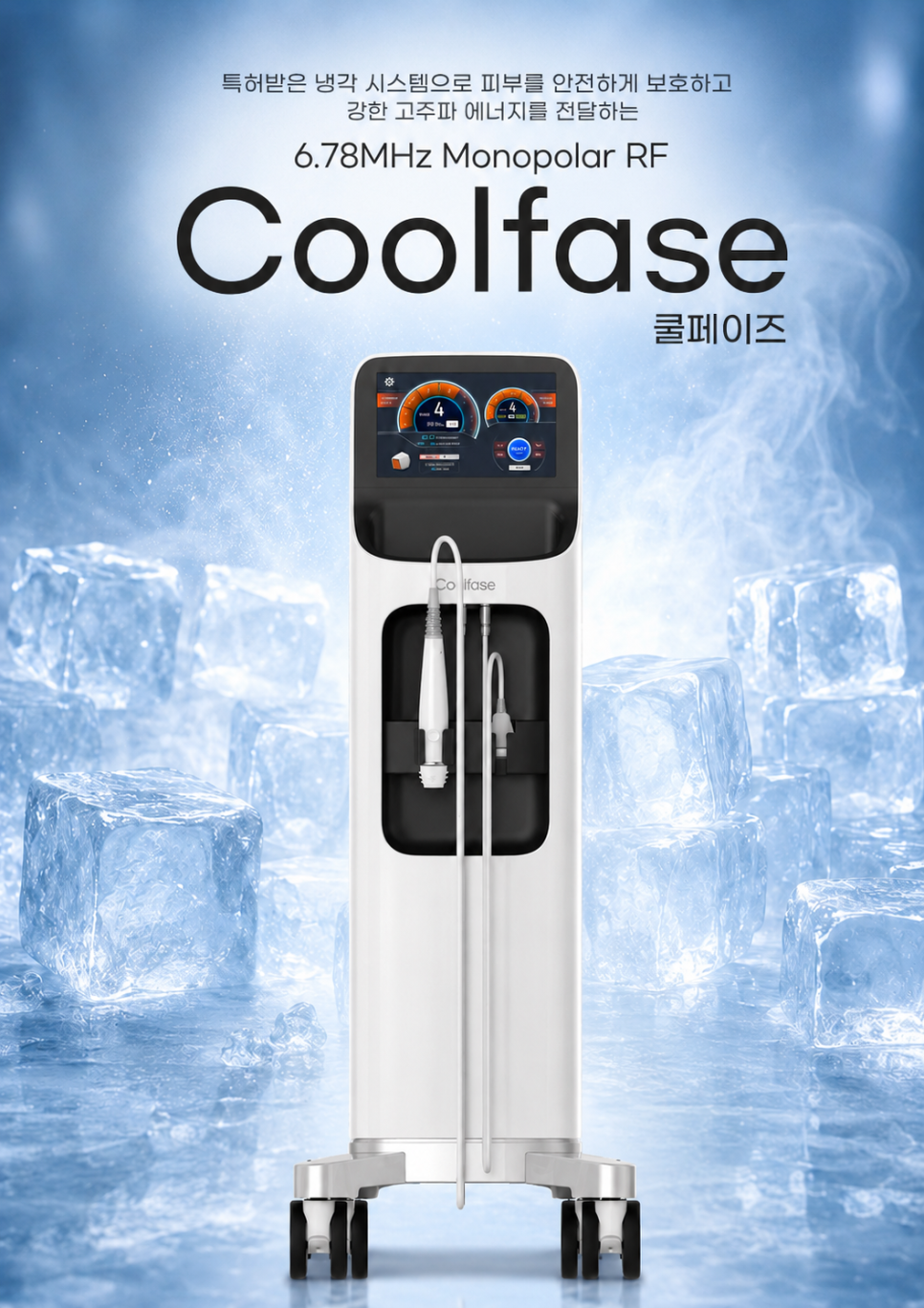
The first question about Coolphase is always whether it really is not hot. It is not — noticeably less than other RF devices. But that advantage is also why the operator has to handle it more precisely.

Why lifting devices get hot
RF devices generate heat from the resistance the current meets passing through skin: the same principle as an electric blanket. The problem is that the first thing the current meets is the epidermis, while the effect we want is deeper: in the dermis, and specifically in the supporting tissue between dermis and fat.
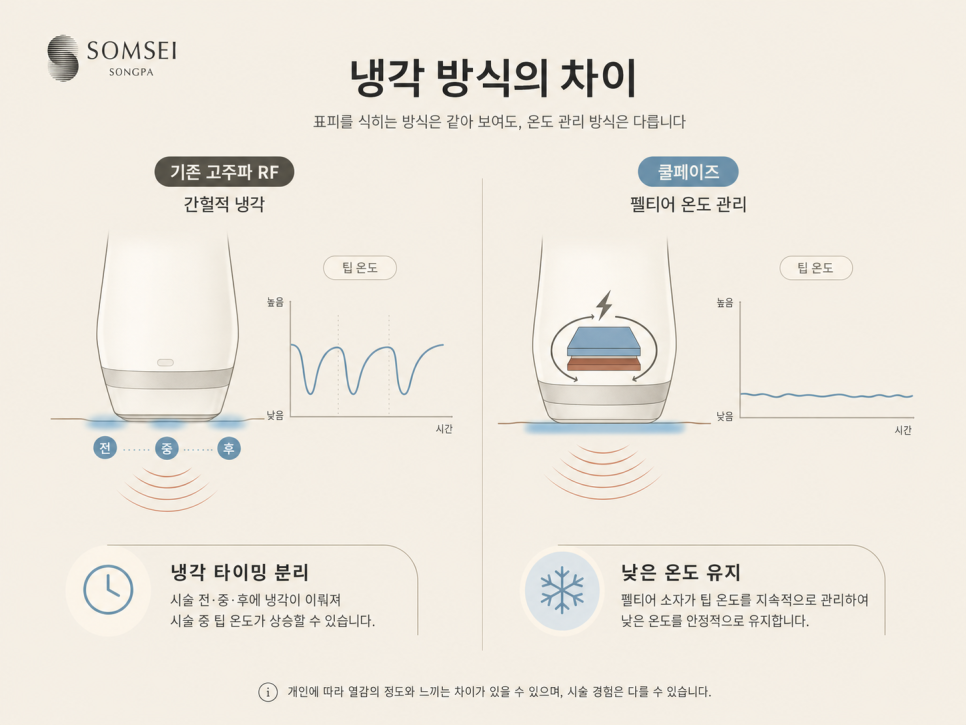
So the heat has to pass through the epidermis to reach depth, but the epidermis responds first and hardest. Heat only the surface and nothing happens; push harder to reach depth and the surface is damaged. Cooling exists to resolve that dilemma: keeping the epidermis cold while heat travels beneath it. Thermage cools three times per shot on a precise algorithm: before, during and after.
Coolphase differs in how the cold is made. It uses a Peltier element, a component that becomes cold on one side and hot on the other when current runs through it. With no ice and no coolant, an electrical signal alone holds the tip temperature low in real time. The response is fast and the temperature stable, so the epidermis takes less stress and the treatment feels far less hot.
A cold tip is not a cold dermis
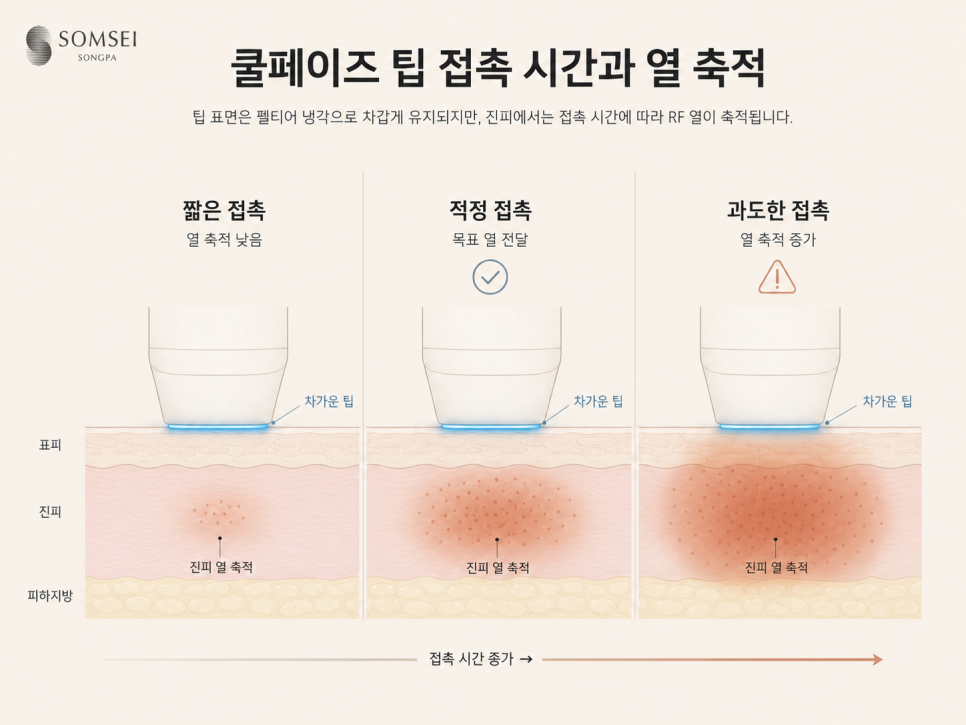
That the tip stays cold is exactly what needs care. The surface of the tip stays cold thanks to the Peltier element, but the heat does not disappear: it keeps transferring into the dermis below and accumulating there. Tip temperature and the temperature inside the skin are two different things.
Hold ice in your hand and warm blood still runs through the vessels in your palm. The outside is cool while the inside carries on. The tip and the dermis are the same: the surface stays cold while heat builds in the dermis as time passes.
So a tip that does not feel hot must not be held in one place. Keep contact for the set time, then lift and move on. This is the decisive difference from Thermage, where the algorithm manages heat and the operator has relatively less to track. With Coolphase, because the tip stays cold, the operator has to hold the contact time and the moment of release accurately themselves. Pressing in one place because it feels cool can build more heat than intended there, or spread energy unevenly so the firmness you expected does not appear.
How the tip is placed
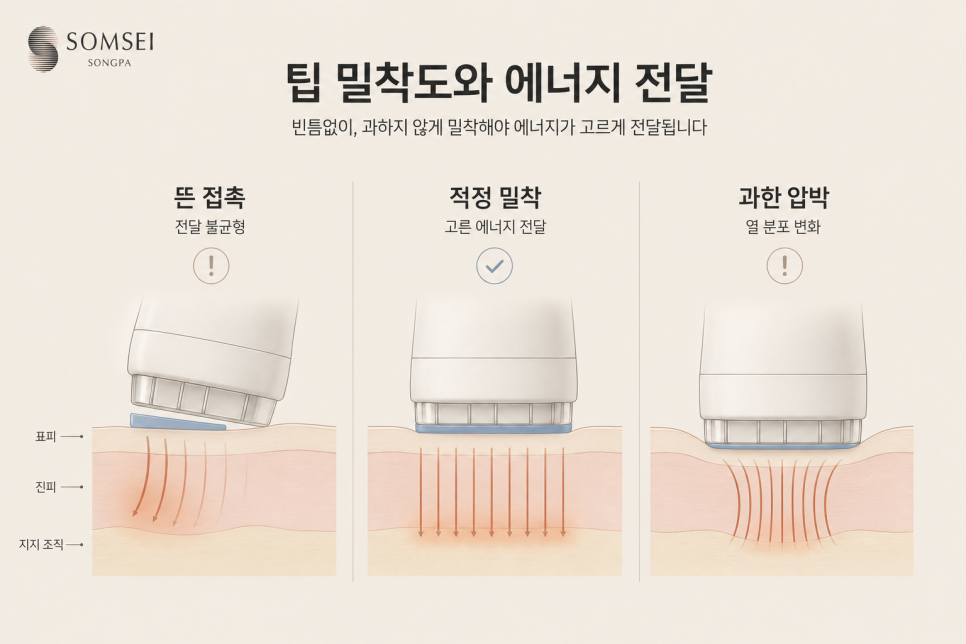
The whole tip has to sit flush against the skin for energy to be delivered evenly. If it lifts slightly or only part of it touches, some areas get too much and others too little, and the result becomes uneven.
Pressing too hard is also a problem. Compressed skin thins momentarily, which changes how the heat spreads. Natural contact, pressing just enough for the skin to give slightly, is best.
So Coolphase depends on two things: contact time and how flush the tip sits. Neither is a function of the device. Both are decided at the operator’s fingertips, which is why the same Coolphase feels different between clinics.
How it is performed here
The principle followed is the manufacturer’s recommended exposure time and energy, with a clear release after each shot before moving to the next area. Not holding longer because the tip stays cold, but placing and releasing on time.
Some people who come here have had Coolphase elsewhere and felt little. Talking it through, the cause was usually contact time or how the tip was placed: held too long because it did not feel hot. When the way cooling and heat are produced differs, the technique has to change with it.
Frequently asked questions
Is it really less hot?
Yes. Peltier cooling holds the tip surface continuously cold, so it feels far less hot than other RF devices. Worth knowing that less heat felt does not mean no energy is reaching the dermis.
If the tip is cold, is holding it longer better?
No. Holding longer can distribute heat in the dermis differently from what was intended. Accurate contact for the set time, then release, is more efficient.
Coolphase or Thermage?
The principles differ, so a direct comparison is difficult. Thermage delivers strong energy safely through a precise cooling algorithm; Coolphase controls tip temperature electrically in real time to reduce the sensation of heat. Which suits depends on skin condition and the result you want.
Does the result differ by clinic?
The device is much the same anywhere, but how precisely contact time and placement are kept differs between operators. That can make a large difference with the same device.
How many sessions?
Collagen regeneration runs over weeks, not on the day. It is usually approached as several sessions about four weeks apart. The exact number depends on skin condition and the degree of laxity.
1 min walk from Dunchon-oryun Stn. Exit 1 (Line 9)
Tel 02-488-9119