
What is LDM? How high-density ultrasound differs from Ulthera
LDM is a treatment that uses high-density ultrasound to improve conditions inside the skin. Its purpose is not to lift. It stabilises water distribution and tissue environment so the skin can recover on its own. That makes it an option when stronger treatments feel like too much, or when the skin is already irritated.

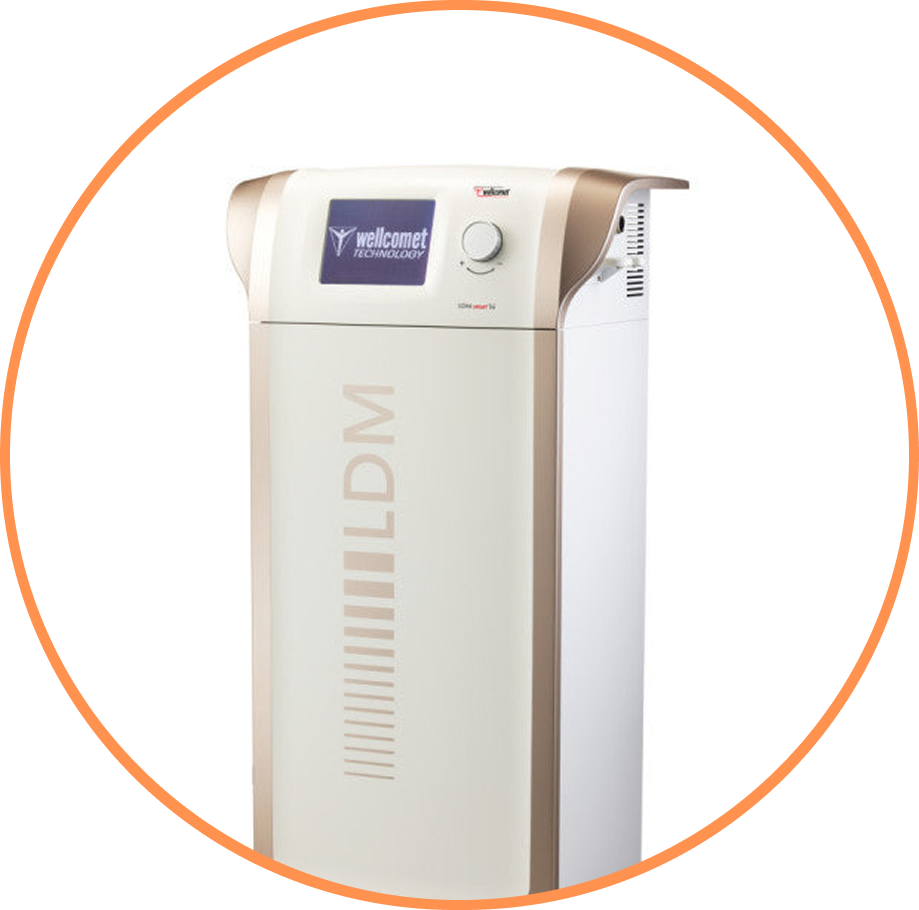
What LDM is
LDM stands for Local Dynamic Micro-massage. It delivers high-density ultrasound with rapidly alternating wavelengths, producing a fine micro-massage effect on skin cells.
What it targets is the environment, in two specific ways:
- Stabilising water distribution and tissue conditions within the skin
- Helping to calm unnecessary inflammatory response
The aim is to create the conditions in which skin can repair itself. It is better understood as a function-restoring treatment than as a hydration treatment.
If it is ultrasound, is it the same as Ulthera?
Both use ultrasound, but they work in opposite directions.
Ulthera and Shurink Universe deliver high-intensity ultrasound deep into the skin to create thermal coagulation points. That induces tissue contraction and collagen remodelling: deliberate, controlled injury that produces lifting and firmness.
LDM uses lower intensity. It does not create physical injury; it stabilises the environment around the cells.
| Ulthera · Shurink Universe | LDM | |
|---|---|---|
| Ultrasound intensity | High | Low |
| Effect on tissue | Thermal coagulation points in deep layers | No physical injury |
| Goal | Tissue contraction and collagen remodelling | Stabilising the cell environment |
| Result | Firmness and lifting | Stable skin condition |
El:rophe Clinic keeps Ulthera Prime, Shurink Universe and LDM together. So the consultation is less about choosing one of them and more about what the skin needs first right now.
The other difference is density. Ulthera and Shurink concentrate energy at a set depth, creating point-shaped coagulation. LDM delivers ultrasound continuously, producing fine changes in the skin’s water structure and tissue environment rather than thermal damage.
LDM can also be used at different frequencies. The lower the frequency, the deeper the energy reaches; the higher it is, the closer it stays to the surface. The depth that needs attention decides the frequency. Skin with a weakened barrier and lingering redness and skin that is dry deep down are not treated at the same depth, even on the same device.
When LDM is useful
What matters is not intensity but whether the purpose matches. It is worth considering in these situations:
- Stronger treatments feel like too much
- Sensitive skin has made you hesitant about treatment
- Skin becomes reactive when the seasons change
- Skin looks dull and feels dehydrated underneath
- Acne keeps coming back
- Skin needs calming after a laser treatment
- A weakened barrier leaves persistent redness
For visitors to Korea, LDM is often combined with laser or booster treatments in the same trip, since it requires no recovery time and can be repeated within a short stay.
Treatment interval
A single session can already make the skin feel more comfortable, but the condition holds more steadily when sessions are repeated at regular intervals. LDM can be performed twice a week or more.
At El:rophe Clinic the skin is first photographed with Mark-Vu, a skin diagnostic device, to check pigmentation, redness, sebum and pores: things the eye alone misses. Skin thickness, dryness, sensitivity and previous treatments are added to that before intensity and interval are set.
Frequently asked questions
Is LDM a lifting treatment?
No. Its purpose is to stabilise water distribution and tissue conditions in the skin, not to lift it. If sagging and firmness are the concern, other treatments need to be considered alongside.
Should I choose Ulthera or LDM?
They address different problems. Sagging and loss of firmness point toward Ulthera or Shurink. Sensitivity, dryness and redness point toward LDM.
Is it painful?
It uses low-intensity ultrasound and does not create thermal coagulation points, so it is less irritating than high-intensity ultrasound treatments. Individual experience varies.
How often should it be done?
Twice a week or more is possible. The interval is adjusted to skin thickness, dryness, sensitivity and previous treatments.
Can I have it after a laser treatment?
It is often used when the skin needs calming after laser. The right timing depends on skin condition, so confirm with the clinic that treated you.
5 min walk from Seoul Nat'l Univ. of Education Stn. Exit 4 (Line 2·3)
Tel 02-533-2103