
Jaw Botox is not for everyone: what to check before repeating it
Many patients ask for jaw Botox hoping for a slimmer V-line. Yet some end up postponing the injection after we talk, while others who came for a different treatment leave having had jaw Botox instead. Here is what makes the difference.

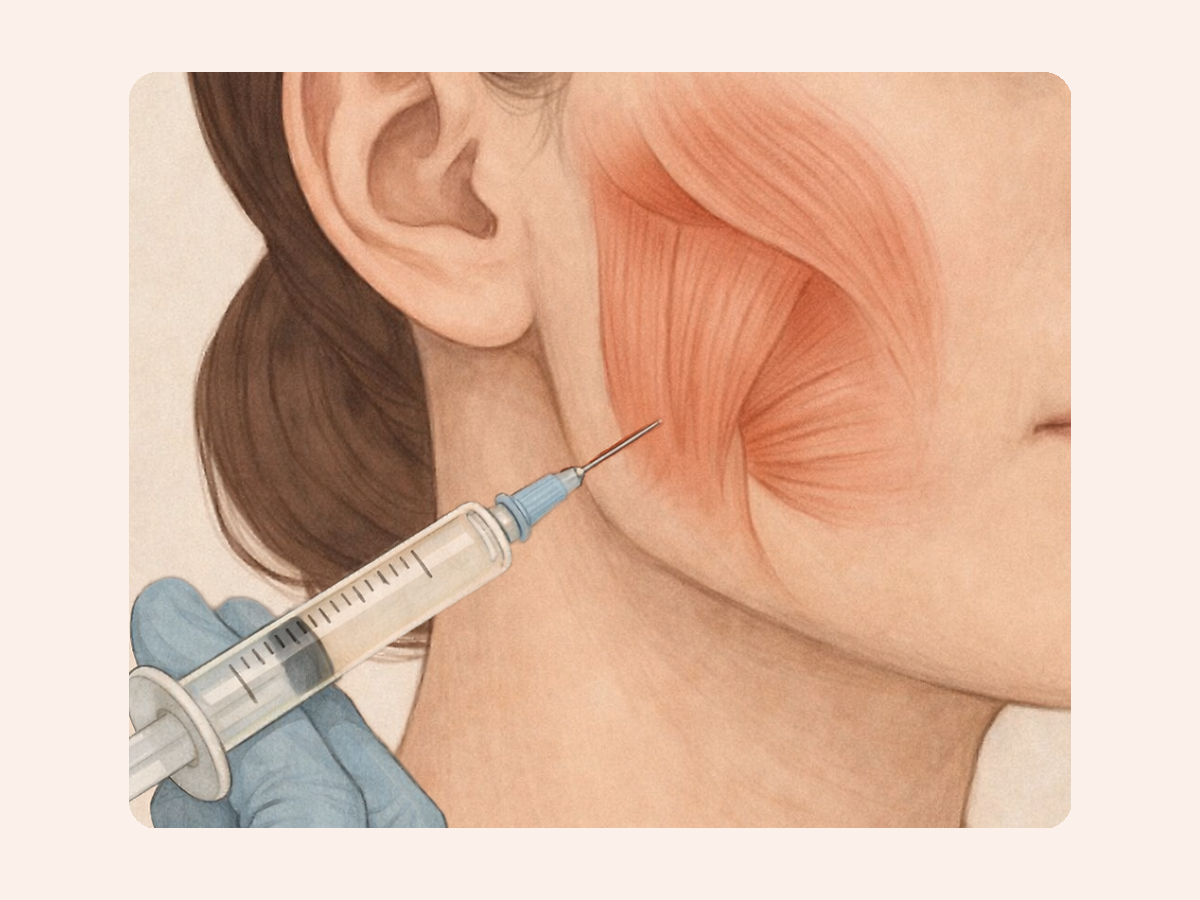
How jaw Botox works
Jaw Botox injects botulinum toxin into the masseter, the chewing muscle, reducing its force. As the force drops, the firm muscle softens and its bulk gradually decreases, which can make the jawline look slimmer.
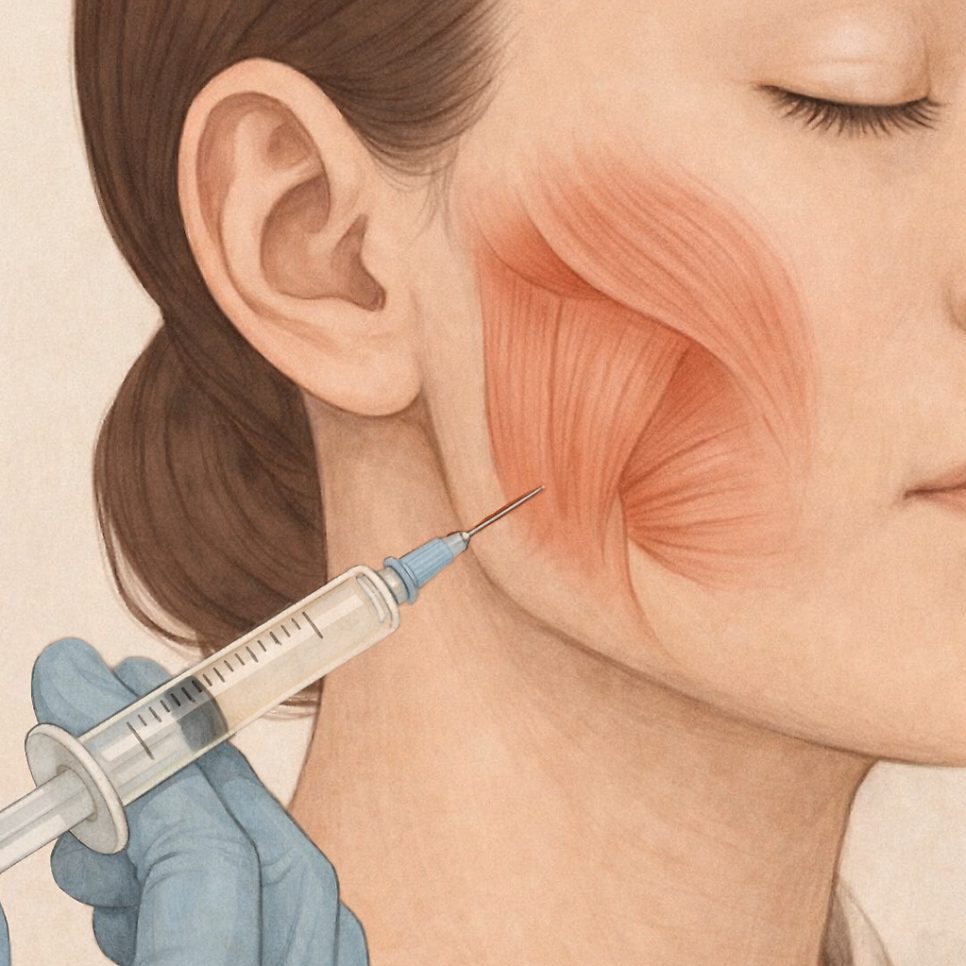
When I actively recommend it
- The square jaw comes from masseter development
- A habit of clenching or grinding the teeth
- A preference for hard, chewy food
- The muscle bulges visibly at the jawline when biting down hard
When a different approach is better
Wanting a V-line is not, by itself, a reason to repeat jaw Botox. With prices falling, injections are often repeated without proper explanation of the mechanism, the right interval, the risk of cheek hollowing, or tolerance.
Repeated carelessly, the face may look slimmer from the front but hollow or angular from the side.
- The masseter is already too thin from frequent injections
- The side jawline has collapsed where the muscle shrank
- Over 40 and the muscle no longer bulges even when biting hard
- The cause is bone structure, fat or sagging: not muscle
For these patients I switch to lifting Botox or other treatments that improve the lower face line: the result is more natural.
Why cheap repetition backfires
Jaw Botox uses a substantial dose. Repeating it at short intervals thins the muscle more than needed and can raise the chance of tolerance to the toxin.
The same V-line concern has different causes in different people: muscle in one, cheek sagging in another, bone and fat distribution in a third. Jaw Botox is a treatment you decide on after confirming the cause of your face shape, not something to get simply because you want a V-line.
FAQ
How often can jaw Botox be repeated?
The dose is not small, so short-interval repetition is not recommended. Keep the interval set at diagnosis, considering muscle thinning and tolerance.
If I stop, does the muscle come back?
As the toxin wears off, muscle force gradually returns. If the muscle has thinned greatly from repeated injections, recovery varies: it depends on its current state.
What does "cheek hollowing" mean?
If the masseter becomes too thin, the area between cheek and jaw can look sunken from the side, or the jawline can look angular. Once this has happened, adding more toxin is not the answer.
My square jaw does not respond to Botox
The cause may not be the muscle. If bone, fat or sagging is responsible, toxin changes little. Whether the muscle bulges when you bite down hard is the first check.
5 min walk from Seoul Nat'l Univ. of Education Stn. Exit 4 (Line 2·3)
Tel 02-533-2103