
New dark patches after summer: melasma, sun spots, or something else?
The patches that surface in autumn are melasma, sun spots, or post-inflammatory hyperpigmentation, and the three are treated differently. Telling them apart is easier than it sounds. If the edge is sharp like a pen dot, it is a sun spot; if it fades out like fog, it is melasma; if it overlaps a spot where acne used to be, it is pigmentation left by inflammation. Repeating aggressive laser toning on melasma can actually darken it, so before raising the energy I go back to the diagnosis.

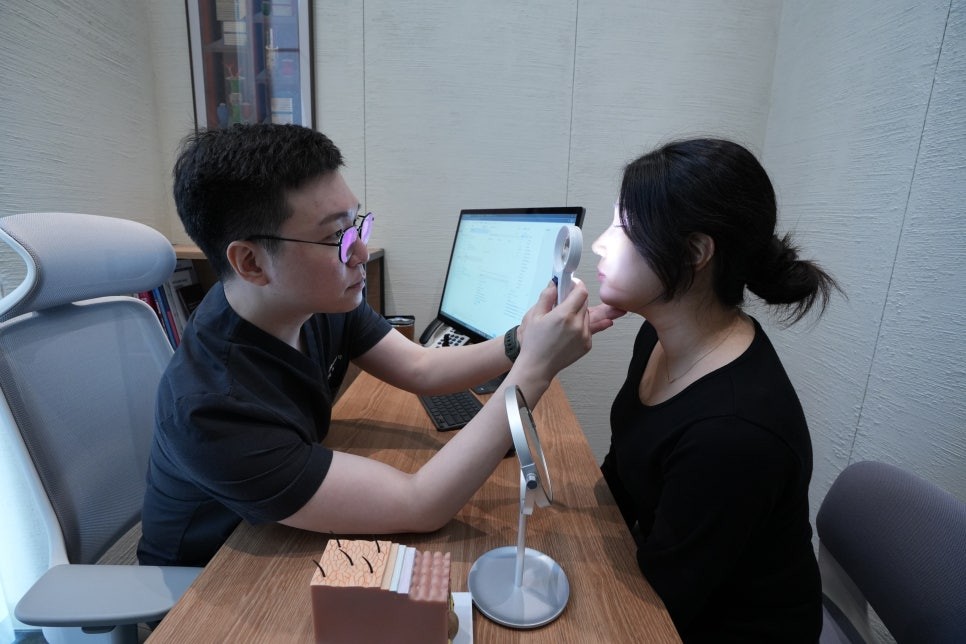
A patient came in last week. She had received more than ten laser toning sessions elsewhere, the patch beside her cheekbone was unchanged, and she asked for a stronger laser. Under the Wood's lamp it was not a sun spot but melasma. And looking closely, the areas treated repeatedly with the laser had become darker than the surrounding skin.
Consultations like this increase every September. Pigment stimulated by summer UV surfaces around this time of year. "A patch appeared after summer that was never there before." "Is this melasma, or just a sun spot?" I hear these questions constantly.
But before any talk of lasers, answering them requires something first: knowing what that patch actually is. Fortunately, the knack for telling them apart is easier than you might think.
Three checks you can do in front of a mirror
First, see whether you can trace the edge of the patch with your eye. Sun spots (freckles, solar lentigines) have borders as sharp as dots made with a pen: you can count them one by one. Melasma spreads like fog, and it is hard to point to where it starts and where it ends.
Second, compare both cheeks. Melasma usually appears in similar positions and similar shapes on both cheeks. If it sits on one side only, a sun spot or a leftover mark is more likely.
Third, think back to whether acne ever appeared in that spot. If the patch overlaps an old acne site or wound, post-inflammatory hyperpigmentation (PIH) is the likely answer. These marks often fade on their own with time, so in many cases there is no need to rush to erase them.
Of course, these three checks do not settle everything. One face often carries all three at once. That is why I chart pigment by area in the patient record: melasma beside the cheekbones, a few sun spots next to the nose, brown marks on the chin from past acne, and so on. Not summarizing one face in one word is where this treatment begins.
What happens when you treat without sorting
What the patient above needed was not a stronger laser. Melasma is pigment that is sensitive to irritation. Raise the energy and repeat, and the skin reacts to that stimulus: post-inflammatory hyperpigmentation layers on top, and you get the paradox of pigment that darkens the more it is treated.
So when someone tells me they have had several sessions with no effect, before raising the intensity I first re-check whether the diagnosis was right. There are real cases where the problem was not pigment refusing to fade, but a target that could not fade under that approach. Conversely, if pigment that had been responding suddenly darkens, the cause may be UV exposure or the interval between sessions: sometimes I pause the treatment and wait for the skin to settle.
This is why I am cautious about "10-session pigment packages" that start without this kind of check. Once the number of sessions is fixed in advance, there is no reason left to revisit the diagnosis midway.
Why melasma is so sensitive
Why must melasma, of all pigment, not be treated aggressively? A sun spot is a finished clump of pigment: you break it up and you are done. Melasma is a state in which the pigment-producing cells themselves have become irritable. To put it in a picture: a sun spot is a stain that has landed on the floor, while melasma is a loose faucet that keeps making new stains. Scrubbing the floor harder does not fix it: the faucet, irritated, only runs faster.
So melasma treatment moves in small steps at low energy, keeping to the intervals. When the laser alone is not enough, I sometimes combine topical medication or adjunct treatment such as tranexamic acid. Which combination to use depends on the depth of the pigment and the condition of the skin: and I do not prescribe adjunct medication to patients who are pregnant, breastfeeding, or taking interacting drugs.
Sun spots, by contrast, can be approached more decisively. Target the lesion precisely and recovery is quick. Even on the same face, the melasma areas get low energy and the sun spots get lesion-focused treatment: using different energy for different areas is what pigment treatment actually looks like.
What else I look at in the consultation room
The mirror checks give you a guess, but in the consultation room I look at a few more things: whether the onset overlaps a hormonal change (pregnancy, oral contraceptives), whether it overlaps a recent procedure site, and(under the Wood's lamp)whether the pigment sits in the epidermis or deeper. Pigment depth is hard to judge with the naked eye, and this difference sets the standard for treatment intensity and the number of sessions.
There is also something you can do before you come in. On your phone, compare a photo from last year with one from now at the same brightness. Seeing when the patch appeared, and whether it darkens every summer, helps narrow down the cause in the consultation.
The approach changes with the diagnosis
| Melasma | Sun spots | PIH | |
|---|---|---|---|
| Laser intensity | Low energy, divided over multiple sessions | Treatment aimed at the lesion | Managing the cause comes first |
| What to watch | Can worsen with strong stimulation | Recurrence is relatively uncommon | Rushing layers irritation on top |
| Combined with | Sun protection, topicals when needed | Sun protection | Treating the cause, such as acne |
With post-inflammatory hyperpigmentation, if acne is still breaking out I do not start with the laser. Erase only the mark while the cause remains, and the same spot comes back. This order is the same one I described in the earlier column on acne and scars.
Laser toning, pico laser, IPL: how do they differ
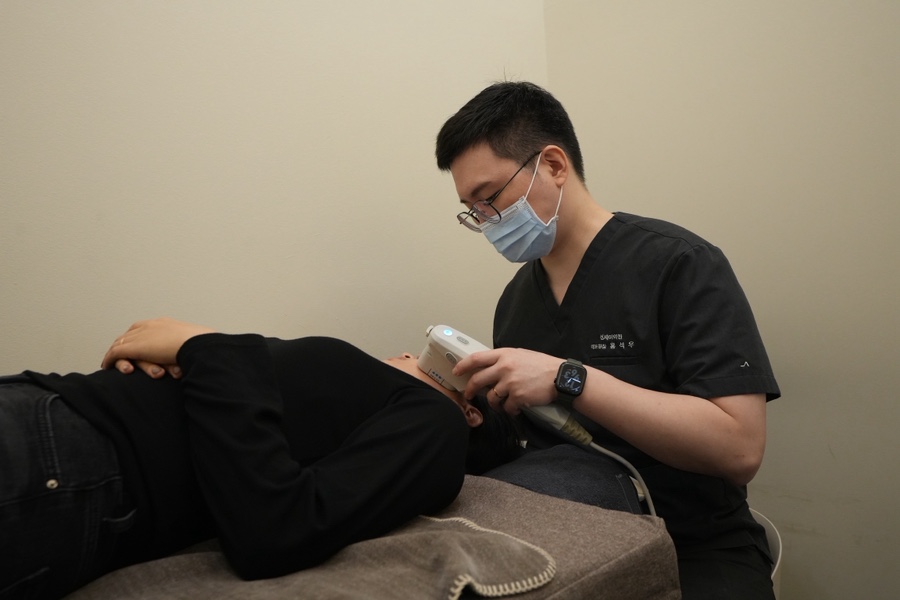
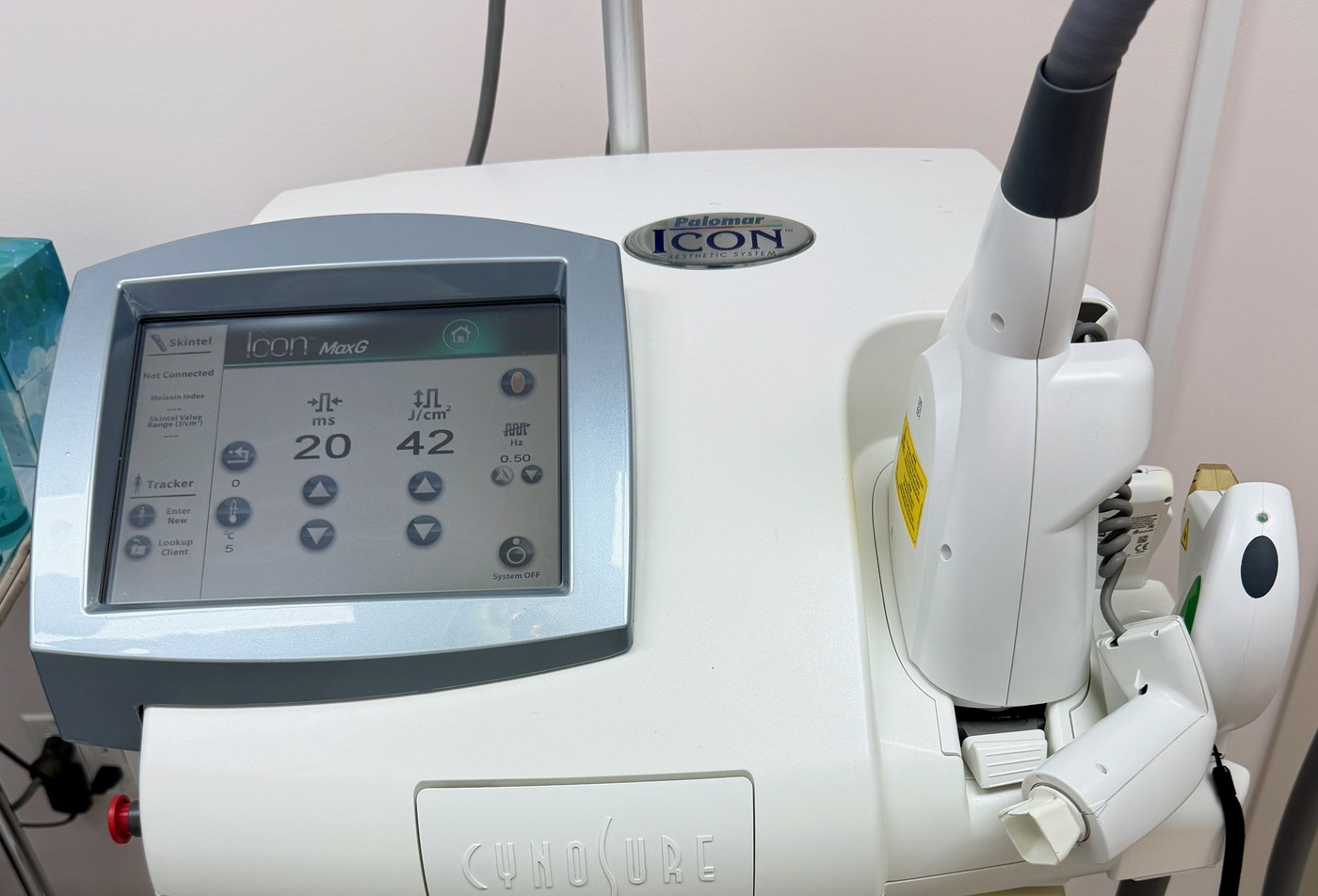
When people say "pigment laser" they usually mean laser toning, but each device is good at a different job. Laser toning repeats low energy over a broad area to reduce pigment gradually, which makes it the baseline for sensitive pigment like melasma. A pico laser delivers energy in an extremely short pulse that shatters pigment particles finely, with little irritation to the surrounding tissue, so recovery tends to be quick. IPL uses broad-spectrum light and handles several lesions at once: sun spots, redness and more.
But something matters more than the device name: what my pigment is and how deep it sits. Even with the same melasma, pigment near the epidermis responds quickly, while pigment that has descended to the dermis needs more sessions. Some patients arrive with a device already picked out: until the diagnosis is done, I cannot tell you which device is right either.
Topical treatment goes alongside. Brightening topicals suppress pigment production during the intervals between laser sessions. I covered azelaic acid for acne marks in an earlier column.
If you start in autumn
Now, as UV weakens, is a good time to start pigment treatment. Once started, it often continues through the winter. Pigment fades over multiple sessions, so it is easier not to lose heart midway if you decide roughly how many sessions to expect before you begin: and if you are visiting Korea, plan the sessions around your visits from the start.
Melasma in particular is closer to a treatment you manage than one that erases. Even once it fades, it can rise again when UV gets stronger, so whether you keep using sunscreen after the treatment ends determines the result. Some patients tell me this takes the wind out of their sails. But the patients who start with accurate expectations end up the most satisfied. A promise to erase it quickly is not something I can say.
Sunscreen habits that protect the result
Half of pigment treatment is sun protection. The standard I give in the consultation room: SPF 30–50, PA+++ or higher, applied generously in the morning: and two thin layers work better than one thick one. UV comes through on cloudy days and by indoor windows, so during the treatment period apply it regardless of the weather.
On days with long hours outdoors, reapply every 2–3 hours. Over makeup, a cushion or stick type is convenient. Right after a procedure, while redness remains, I recommend a low-irritation mineral (physical) sunscreen. Whether a patient is using sunscreen properly shows to some degree in the skin at the next visit. What the patients whose treatment goes well have in common is usually not the number of laser sessions but the sunscreen habit.
Frequently asked questions
Can I tell melasma from sun spots at home?
You can make a good guess with three checks: whether the edge is sharp, whether both sides look similar, and whether it overlaps an old acne site. But pigment depth is hard to judge with the naked eye, and since that difference sets the treatment intensity, confirming it in a consultation is more accurate.
A spot I lasered before has come back. Is that recurrence?
Sometimes pigment that had faded darkens again with UV exposure, and sometimes new pigment forms on top. The two are handled differently, so re-checking the cause comes first.
I heard pigment lasers should be avoided in summer. Is autumn okay?
With weaker UV it is an easier season to manage. But what matters more than the season is whether you keep up sun protection after the procedure. Even in autumn, if you spend a lot of time outdoors, I adjust the intensity.
It is melasma and I want it gone fast. Can I just have it done strongly?
Melasma is not pigment that improves faster the harder you treat it. I regularly see the opposite in the consultation room: irritation accumulates and it darkens. I recommend low intensity, repeated with proper intervals.
Can I have other procedures during pigment treatment?
The skin is in a sensitive period, so we space things out to keep stimuli from overlapping. Tell me in advance about procedures you are having or planning, and I will sequence them for you.
1 min walk from Dunchon-oryun Stn. Exit 1 (Line 9)
Tel 02-488-9119