
"No pigment laser in summer" — is that still true?
People postpone pigment treatment to autumn, then winter, then another summer arrives and nothing has changed. Summer is not an absolute contraindication. That does not mean anyone can have anything at any time.

Where the advice came from
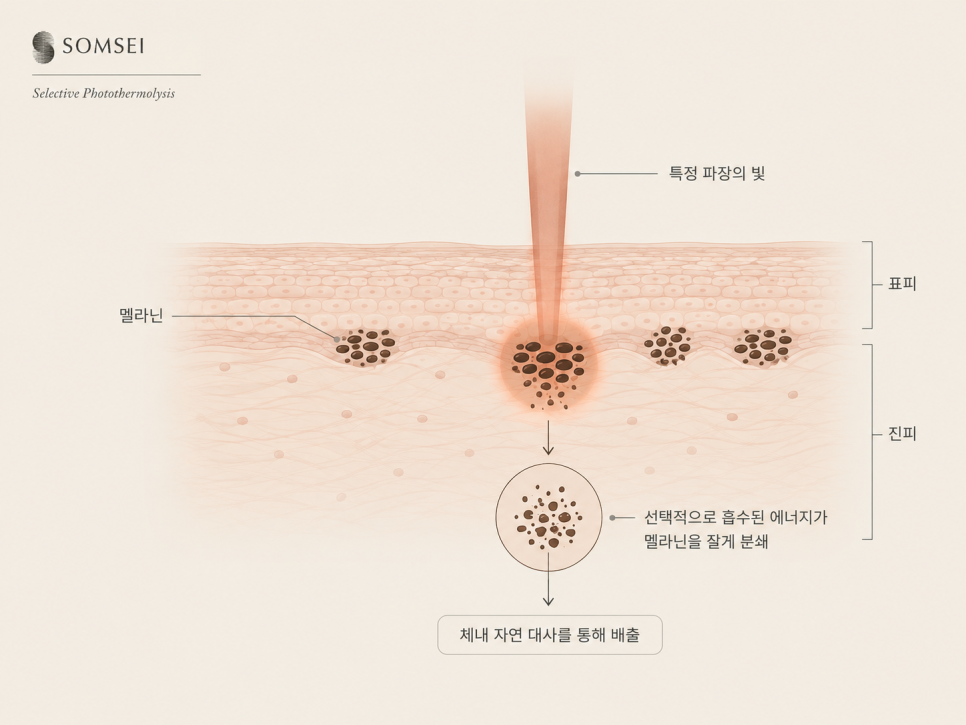
A pigment laser uses a wavelength melanin absorbs well. When melanin absorbs the energy, heat and pressure are generated momentarily and the pigment breaks up. The point is not that no energy reaches normal skin, but that energy is concentrated on the pigment relative to surrounding tissue. This is selective photothermolysis.
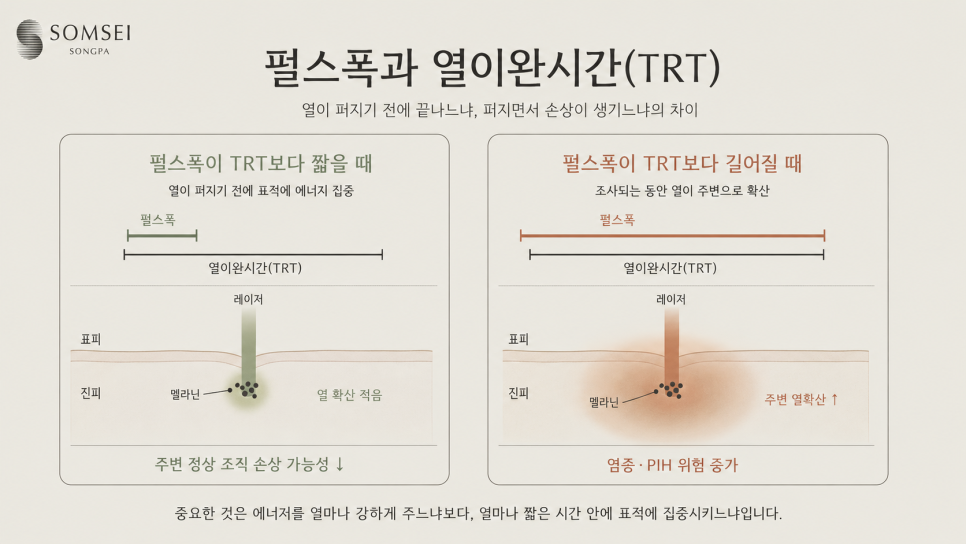
Two concepts govern it. Thermal relaxation time is how long the target takes to release absorbed heat and cool. Pulse width is how long the laser delivers energy in one shot.
If the pulse width is short enough relative to the thermal relaxation time, energy concentrates on the pigment before heat spreads. If the pulse is longer, heat diffuses into surrounding normal tissue, and redness, irritation and inflammation increase. That inflammation can lead to post-inflammatory hyperpigmentation: the mark that darkens after aggressive treatment.
Before selective photothermolysis was established, early lasers produced relatively more thermal damage. With irritated skin then exposed repeatedly to strong UV, melanocytes were re-stimulated and the PIH risk rose. At that time the advice was well founded.
From nanoseconds to picoseconds
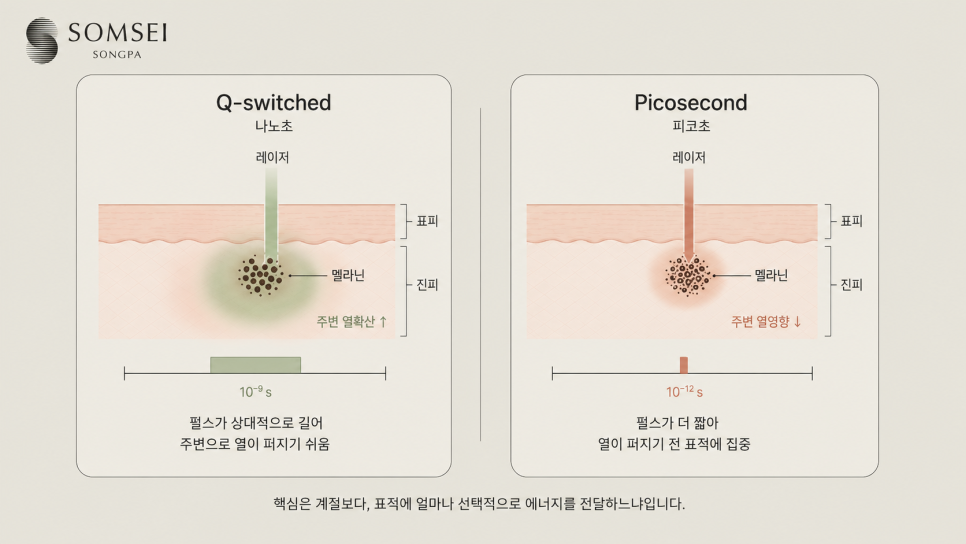
Q-switched lasers deliver energy in nanoseconds(billionths of a second)which made selective photothermolysis effective and greatly reduced thermal damage to surrounding tissue. From that point the season carried less weight.
Picosecond lasers shortened the pulse further, to trillionths of a second. Less time for heat to accumulate, and a photomechanical effect: breaking pigment with momentary pressure rather than heating it: that fragments pigment more finely while reducing thermal damage further.
What summer actually requires
Skin is temporarily sensitive after a laser. Repeated strong UV exposure in that window increases melanin production regardless of season, and PIH becomes more likely. So the timing or intensity is adjusted in these situations:
- Recently and heavily tanned, or currently tanned
- Strong UV exposure planned: holiday, golf, hiking, water sports
- Circumstances that make sun protection and aftercare difficult
- Treatment strong enough to involve epidermal damage or crusting
- A skin type at high risk of PIH
Clinically, these factors matter far more than the season: which pigment it is, the Fitzpatrick skin type, whether the skin is recently tanned, how the intensity is set, and how well UV can be managed afterwards.
Accurate diagnosis, the right laser, the right energy setting and thorough sun protection are what decide the result. "No pigment laser in summer" no longer applies as a general rule with current technology.
Aftercare in summer
Skin stays sensitive for several days after a laser. Repeated strong UV in that period can produce new pigment regardless of season. Aftercare matters more than the calendar.
- Apply sunscreen in sufficient quantity. Applied thinly, you do not get the labelled SPF
- Reapply every two to three hours during long outdoor activity
- Add physical protection: a hat, a parasol
- With melasma, visible light matters as well as UV
Frequently asked questions
Can I have a picosecond laser in summer?
Being summer alone does not prevent it. Pigment type, skin type, recent tanning and planned outdoor activity decide the intensity and timing.
Is a picosecond laser always better than Q-switched?
It depends on the pigment type, depth and skin type. Newer does not mean better for every pigment; some respond better to Q-switched.
Is recovery slower in summer?
Not necessarily. But sweat, heat and increased UV exposure can irritate the treated area and make aftercare harder.
What matters most?
Three things. Not treating aggressively on tanned skin; choosing a wavelength and intensity that suit the skin type and pigment depth; and thorough sun protection afterwards.
1 min walk from Dunchon-oryun Stn. Exit 1 (Line 9)
Tel 02-488-9119